Nose and ear hair trimming is one of the most searched grooming topics for men and one of the least talked about — which means most men are using whatever they could find without knowing whether it's any good. We ranked the five best nose hair trimmers of 2026 by rotary blade precision, nasal comfort, waterproofing, and the thing most guides skip: how thoroughly they cut without pulling.
Rotary vs Foil: Which Cuts Better in the Nose
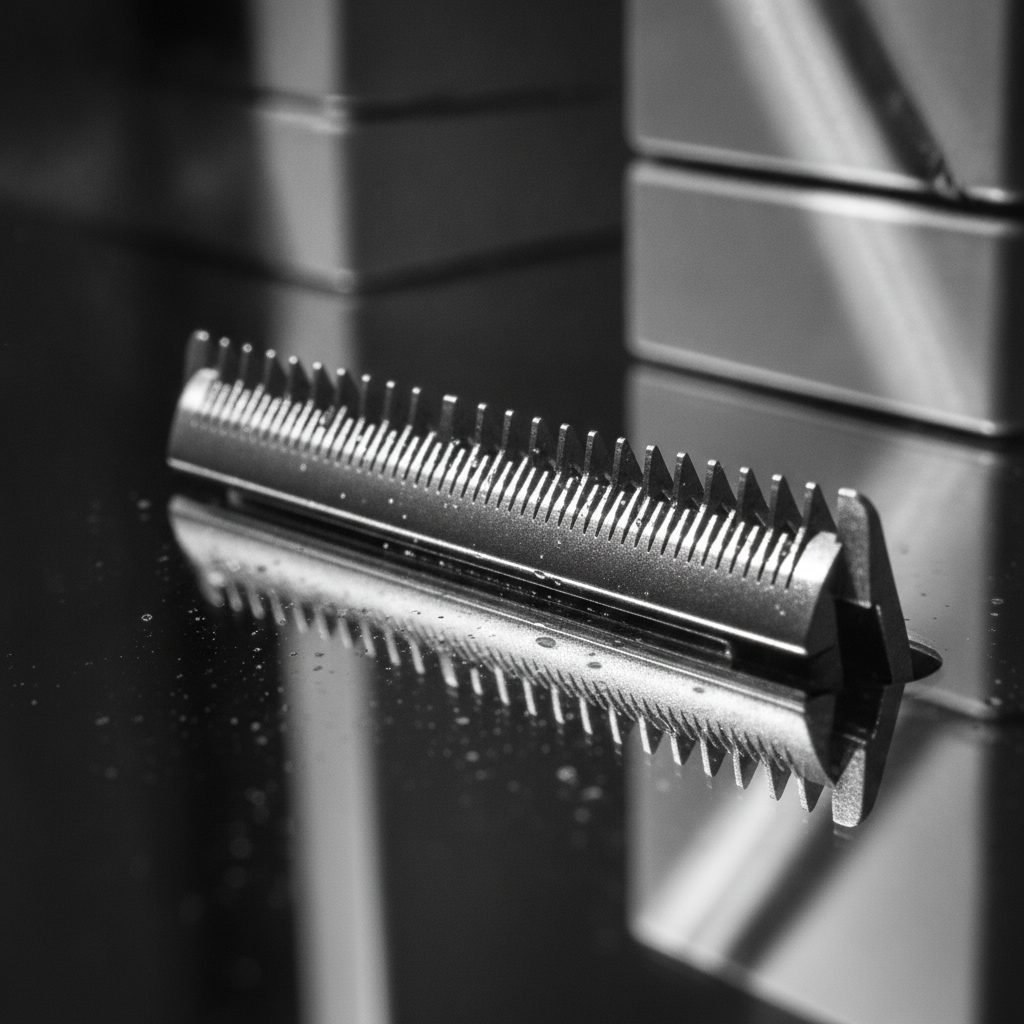
Nose hair trimmers use one of two blade architectures. Rotary systems — used by Panasonic and Philips — spin a cylindrical blade inside a protective drum. Hairs enter through slots in the drum and are cut as the blade sweeps past the slot opening. The rotary approach handles curved entry angles well, making it forgiving for the irregular insertion paths that nasal anatomy forces.
Foil systems work like a miniaturized electric shaver: an oscillating blade sweeps back and forth beneath a thin perforated foil that hairs penetrate before cutting. Foil systems capture coarser, stiffer hairs more reliably because the foil actively draws hair into position before the blade fires — where rotary blades sometimes deflect stiff hairs rather than engaging them.
Why You Should Never Use Scissors in Your Nose
The nasal mucosa is one of the most vascular surfaces in the human body. Scissors — even the round-tipped grooming variety — risk perforating the mucosa with every use, creating micro-wounds that can cause significant bleeding and, more seriously, provide entry points for pathogens that travel directly to the brain via the cavernous sinus. This is not theoretical: nasal and upper-lip infections have caused fatal cavernous sinus thrombosis in documented cases. A rotary trimmer that never contacts the mucosa eliminates this risk entirely.
How Often to Trim
Nasal hair grows at roughly 0.35mm per day — similar to facial hair — meaning visible protrusion typically recurs every 5 to 10 days depending on individual growth rate. Weekly trimming maintains a clean line without over-removing nasal hair, which serves an important filtration and humidification function. Never remove all nasal hair: only trim what's visible from eye level. Nasal hair follicles don't regrow at the same rate once fully removed, and their absence noticeably increases airborne particulate inhalation.
Best Nose Hair Trimmer for Men 2026 — The Rankings
1. Panasonic ER-GN70 ($50)
The Panasonic ER-GN70 is the precision benchmark for nose hair trimmers — Panasonic calls it the most powerful nose trimmer it has ever made. A high-velocity motor drives dual-edge blades that cut at the top and the sides, so it handles both long and short hairs cleanly through thick, coarse growth with no pulling or tugging. A safety-cone design keeps skin away from the blades, and the angled profile makes it easier to reach inside the nose without contorting your wrist. Its standout feature is a micro-vacuum that collects clippings as you trim, and a vortex cleaning system flushes the head under the tap. It works wet or dry and runs up to 40 minutes on battery power. This is the right answer for most men.
Strengths: Dual-edge top + side blades · Micro-vacuum collects clippings · Safety-cone skin protection · Wet/dry with vortex cleaning · Angled, easy-reach profile
Limitations: Batteries not included · Premium price for the category · No detail trimmer attachment
2. Philips Norelco Nose Trimmer 5000 ($25)
Philips' Nose Trimmer 5000 is the most complete above-the-beard tool here. Its Protective Guard System puts a barrier between skin and blades, so it is safe on sensitive nasal skin, while dual-sided steel blades cut efficiently without pulling. A detail trimmer attachment handles sideburns and beard edges as well as nose, ears and eyebrows, turning it into a small grooming kit. It runs on an AA battery for long-lasting performance and carries a 2-year warranty. A complete grooming solution for the face above the beard line.
Strengths: Protective Guard System · Dual-sided steel blades · Detail trimmer for edges · Nose, ears and eyebrows · 2-year warranty
Limitations: AA battery, not rechargeable · No vacuum or flush cleaning · Attachment changes take a moment
3. Wahl Micro Groomsman ($10)
At around $10, the Wahl Micro Groomsman punches far above its weight. It ships with two heads — a rotary head reserved for nose and ears and a detail head for everything else — which keeps nose trimming hygienic and separate. The rugged anodized aluminum housing and self-sharpening precision blades come from a brand that has been supplying barbers and salons since 1919, and the compact body slips into any dopp kit. It handles brows, sideburns and neckline touch-ups as well as the nose. The AA battery design means you'll never be caught with a dead device at the wrong moment. The best buy if budget is the primary constraint.
Strengths: Best value at $10 · Separate rotary + detail heads · Anodized aluminum housing · Self-sharpening blades · Wahl professional heritage
Limitations: AA battery only · No waterproof rating listed · No flush cleaning
4. Remington Nose, Ear & Eyebrow Trimmer ($14)
Remington's trimmer earns its place on easy maintenance. Dual-sided Comfort Trim blades remove unwanted hair quickly without pulling, and it is 100% waterproof, so you can use it in the shower and rinse it clean in seconds. Its exclusive CLEANBoost button flushes hair and build-up out from the inside, which keeps the blades sharp and performing like new for longer. Two attachments — a rotary head for nose and ears and a vertical detail trimmer for edges, sideburns and brows — make it a one-tool touch-up kit, and the AA battery is included.
Strengths: CLEANBoost internal flush · 100% waterproof · Rotary + vertical detail heads · Dual-sided Comfort Trim blades · AA battery included
Limitations: AA battery, not rechargeable · No vacuum collection · Basic ergonomics
5. Panasonic Wet/Dry Nose & Ear Trimmer ($20)
Panasonic's entry trimmer brings the fundamentals of the ER-GN70 to around $20. Its dual-edge, hypoallergenic stainless-steel blades are curved to match the contour of the nostril, so they trim safely and precisely without irritating skin or pulling hairs. It is fully waterproof for use in the shower, and a vortex cleaning system draws in tap water and spins it through the cutter head to clean it in seconds. It runs on a single AA battery (not included) and comes with a protective cap and cleaning brush. For a secondary bathroom trimmer, travel kit or first purchase, this is the entry point with no significant compromises.
Strengths: Panasonic blade quality at $20 · Fully waterproof · Vortex cleaning system · Hypoallergenic curved blades · Slim travel profile
Limitations: Battery not included · No vacuum collection · No detail trimmer
Comparison Table
| PRODUCT | STANDOUT | TRADE-OFF | PRICE |
|---|---|---|---|
| Panasonic ER-GN70 | Dual-edge top + side blades | Batteries not included | $50 |
| Philips Norelco Nose Trimmer 5000 | Protective Guard System | AA battery, not rechargeable | $25 |
| Wahl Micro Groomsman | Best value at $10 | AA battery only | $10 |
| Remington Nose, Ear & Eyebrow Trimmer | CLEANBoost internal flush | AA battery, not rechargeable | $14 |
| Panasonic Wet/Dry Nose & Ear Trimmer | Panasonic blade quality at $20 | Battery not included | $20 |
Related reading: Best Men's Grooming Kit 2026.