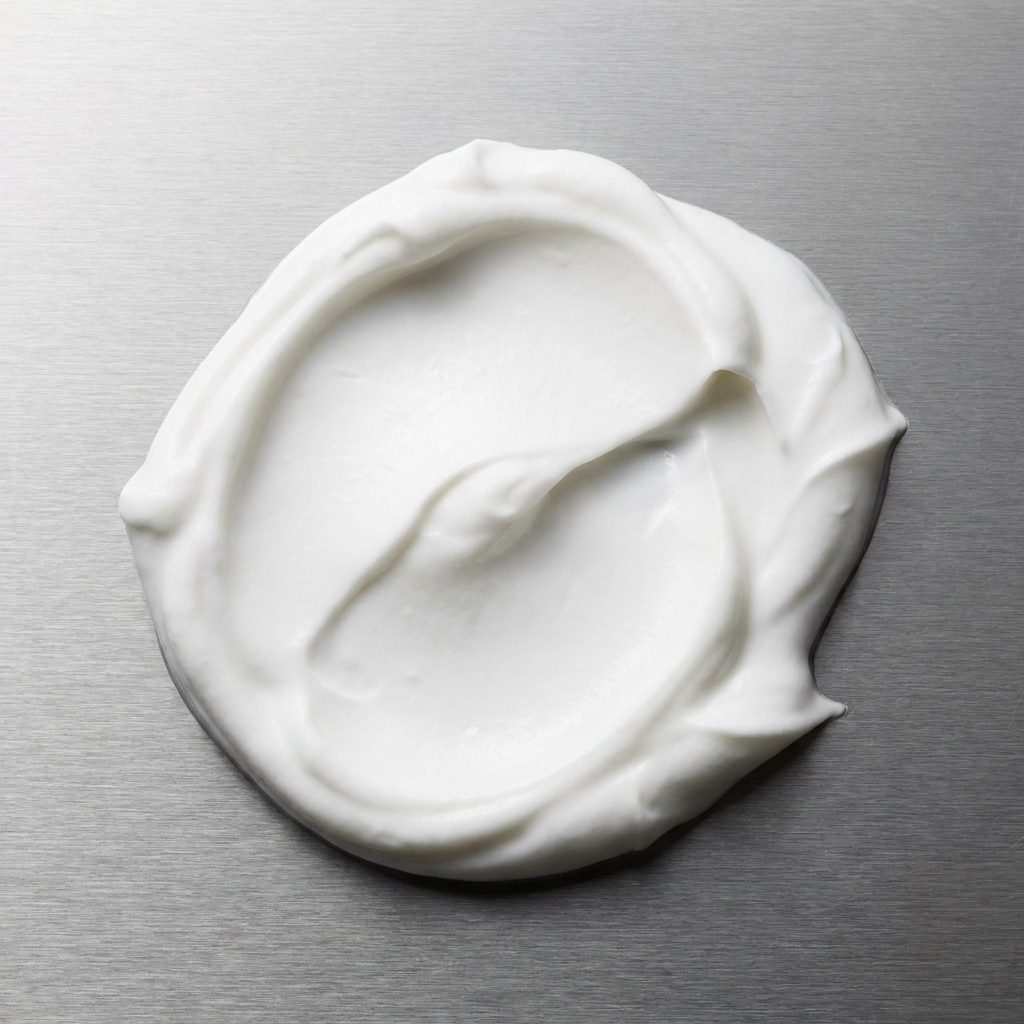
Body moisturizing occupies a peculiar blind spot in men's grooming. Men who invest thoughtfully in their facial skincare — cleanser, moisturizer, SPF, perhaps a serum — will emerge from a daily hot shower and apply nothing to the remaining 95% of their skin surface area. The cultural framing bears some responsibility: skincare for men has historically been positioned as a facial concern, with body care coded as feminine or unnecessary. This is a categorization error with real consequences for skin health, comfort and long-term barrier integrity.
The skin on your body faces many of the same biological challenges as your face — transepidermal water loss (TEWL), lipid barrier disruption, environmental assault — and several that your face does not encounter with the same frequency: the dehydrating effect of hot showers, the mechanical friction of clothing, the exacerbating role of central heating and air conditioning in stripping ambient humidity. The stratum corneum on the body is doing the same protective work as its facial counterpart. Neglecting it has the same category of consequences: dryness, flaking, impaired barrier function, and over time, accelerated skin aging.
This guide establishes the science of why body lotion matters, explains the ingredient categories that determine efficacy, and ranks five body lotions for men in 2026 by formulation quality, texture and value.
The Three Classes of Moisturizing Ingredients
All moisturizers — regardless of price point, marketing language or brand positioning — operate through three distinct mechanisms. Understanding these categories allows you to read an ingredient list and predict a product's performance before purchasing.
Humectants draw water into the skin from two sources: the environment (when ambient humidity is above approximately 70%) and, more commonly, from the deeper layers of the dermis upward into the stratum corneum. Key humectants include glycerin (the most widely used and well-evidenced), hyaluronic acid (which can hold up to 1,000 times its weight in water), urea (which also has keratolytic properties at higher concentrations, softening thickened skin), and panthenol (provitamin B5). Humectants increase water content in the stratum corneum but, in dry conditions without an accompanying occlusive, can paradoxically increase TEWL by drawing water toward the skin surface where it then evaporates.
Emollients fill the microscopic gaps between corneocytes (the flattened, dead cells that form the stratum corneum), smoothing and softening the skin's surface texture and improving its structural integrity. They replenish the lipid matrix that holds the stratum corneum together. Key emollients include ceramides (which fill lipid gaps in the stratum corneum's lamellar bodies), squalane (a lightweight, skin-identical lipid derived from olives or sugarcane), shea butter (a complex fat rich in oleic and stearic acid), and silicones such as dimethicone (which form a breathable, smoothing layer). Emollients address the structural dimension of skin dryness — the weakened barrier architecture — rather than just its hydration status.
Occlusives form a physical film over the skin surface that slows TEWL by creating a hydrophobic barrier. They do not add moisture to the skin; they prevent existing moisture from escaping. Key occlusives include petrolatum (the most effective occlusive known, reducing TEWL by approximately 98%), beeswax, lanolin, and mineral oil. Silicones such as dimethicone and cyclomethicone also have mild occlusive action. In body lotion formulations, a modest occlusive component — not the dominant petrolatum of something like Vaseline, but a supporting level — is what makes the difference between a lotion that feels hydrated immediately and one that still feels hydrated three hours later.
The best body lotions for men combine all three classes in proportions appropriate to their intended texture and use case. A lightweight daily lotion typically leads with humectants and emollients and uses occlusives sparingly. A richer winter formula will weight occlusives more heavily. Understanding this framework prevents you from purchasing a product whose ingredient architecture does not match your skin's actual needs.
Ceramides — The Science
Ceramides are a family of sphingolipid molecules — lipids with a long-chain amino alcohol backbone — that constitute approximately 50% of the total lipid content of the stratum corneum. They are not supplementary to the skin barrier; they are structurally foundational to it. In the stratum corneum, ceramides, cholesterol and free fatty acids are organized into lamellar bodies — layered lipid structures packed between corneocytes — that collectively form the "mortar" of the brick-and-mortar barrier model. The corneocytes are the bricks; the ceramide-rich lamellar bodies are the mortar.
Ceramide deficiency — whether from genetic predisposition (as in atopic dermatitis, where ceramide levels are measurably reduced), aging (ceramide synthesis decreases progressively from the third decade of life), or environmental depletion (hot water, surfactants in cleansers and body washes stripping surface lipids) — directly impairs barrier function. The consequence is elevated TEWL, increased skin permeability to irritants and allergens, and the clinical presentation of xerosis: dry, flaking, sometimes itchy skin.
Topical ceramides replenish this depleted lipid matrix. They are categorized by number based on their structural variations: ceramide 1 (also called ceramide EOS) plays a critical role in binding the outer envelope of the corneocyte to the lamellar body; ceramide 3 (NP) is the most abundant ceramide in healthy skin and essential for the lamellar structure; ceramide 6-II (AP) contributes to barrier function and has been specifically associated with desquamation regulation. The triad of ceramide 1, ceramide 3 and ceramide 6-II — the combination used in CeraVe's formulations — replicates the three ceramide subtypes with the most clearly documented structural roles in the stratum corneum. This is not marketing; it reflects the composition of the ceramide research conducted primarily in the 1980s and 1990s by Elias, Feingold and colleagues that characterized the lamellar body system.
CeraVe's MVE (MultiVesicular Emulsion) delivery technology encapsulates ceramides and other actives in a lamellar structure that releases them gradually over time, maintaining barrier support beyond the immediate post-application window. This sustained-release mechanism is what distinguishes it from ceramide products that simply suspend ceramides in an emulsion base without addressing their delivery kinetics.
When to Apply Body Lotion
Application timing has a disproportionate effect on a body lotion's performance. The optimal window is within three minutes of exiting the shower, while the skin is still damp. At this point, the stratum corneum is hydrated — water has been absorbed into the outermost layers during the shower — and applying a body lotion with occlusive and emollient components locks this moisture into the skin before TEWL can carry it away. Waiting until the skin is fully dry means you are applying the lotion to a stratum corneum that has already lost the shower's hydration benefit.
Shower temperature is a variable most men do not associate with skin health, but it is significant. Hot water — above approximately 42°C — strips the stratum corneum of surface lipids more aggressively than lukewarm water. The sebum and surface lipids that contribute to the skin's first-line barrier are soluble in hot water and are removed by it. The result is a post-shower skin surface that is both hydrated (temporarily) and lipid-depleted — high in water content but structurally weakened. This is precisely the condition that benefits most from rapid emollient application. Men who shower at high temperatures and apply nothing afterwards are creating a dehydration cycle: the hot water temporarily plumps the stratum corneum, the lipid stripping then accelerates TEWL, and the skin dries faster than it would have without the shower entirely.
Pat dry with a towel rather than rubbing. Rubbing the skin dry with a towel after showering creates mechanical friction on a stratum corneum that has been hydrated and temporarily softened — its structural integrity is lower than normal when wet. Pat drying removes excess water without disrupting the surface lipid film or creating friction-induced micro-inflammation. Apply body lotion immediately after pat drying, while the skin retains surface moisture.
Best Body Lotions for Men 2026
1. CeraVe Moisturizing Lotion — Best Overall
CeraVe Moisturizing Lotion is the product that formulation science would design if it were optimizing for barrier restoration in a mass-market body lotion. The three-ceramide combination (ceramide 1, ceramide 3, ceramide 6-II) directly addresses the lipid matrix of the stratum corneum rather than simply adding surface hydration. Hyaluronic acid provides humectant depth — drawing water into the deeper layers of the stratum corneum — while the MVE delivery technology ensures that the ceramides continue releasing into the skin over several hours rather than depositing all their efficacy in the first minutes after application. The texture is a medium-weight lotion that absorbs in under two minutes without greasy residue, making it workable in the morning routine before dressing. Dermatologist-developed and extensively clinically tested — this is the baseline against which other body lotions for men should be evaluated in 2026.
2. Lubriderm Men's 3-in-1 Lotion — Best Budget
Lubriderm Men's 3-in-1 is engineered specifically for the male skin texture and the male daily-use case: a lightweight, fast-absorbing formula that does not leave the greasy residue that often causes men to avoid body lotion entirely. Vitamin E provides antioxidant support and contributes to skin conditioning as an emollient component. Shea butter delivers fatty acid content — oleic, linoleic and stearic acids — that replenishes the surface lipid film depleted by showering. At approximately $10, it represents the most accessible entry point into daily body moisturizing that does not compromise on the key emollient requirements. The non-greasy texture is not simply a marketing claim but a consequence of the lotion's lower viscosity and the selection of lighter emollient fractions — it genuinely absorbs faster than richer formulas, which makes adherence to a daily application habit easier for men who have not previously incorporated body lotion into their routine.
3. Kiehl's Creme de Corps — Best Premium
Kiehl's Creme de Corps has been in continuous production since 1968, and its longevity is explained by its formulation intelligence rather than nostalgia. Squalane — present as a skin-identical emollient — is chemically analogous to squalene produced naturally by human sebaceous glands, making it exceptionally compatible with the skin's existing surface lipid chemistry and non-comedogenic by nature. Beta-carotene (a provitamin A precursor with antioxidant properties) gives the formula its characteristic pale amber tone and provides free radical scavenging support. Cocoa butter contributes a rich fatty acid profile — high in stearic and palmitic acid — that makes this one of the more emollient-dense body lotions in this guide. The texture is richer than the lightweight options and takes slightly longer to absorb — positioning it as an evening application or a winter formula for men whose skin is experiencing significant dryness. At $42, it is a clear premium purchase, but the formulation quality and skin feel justify it for those prioritizing a luxurious, restorative body lotion.
4. Jack Black Dry-Down Friction-Free Lotion — Best for Active Men
Jack Black Dry-Down is formulated with an explicit use-case in mind: application after sport or physical activity, where skin comfort under clothing matters and absorption speed is non-negotiable. Dimethicone — a silicone polymer — provides both emollient function and a lubricity effect that reduces friction between skin and fabric, which is the "friction-free" element of the name. This is not a trivial benefit for men who experience chafing during or after exercise. Vitamin E provides antioxidant support. The overall formula absorbs exceptionally quickly — within 60 to 90 seconds on most skin types — and leaves no perceptible residue, making it usable immediately before dressing after gym sessions. At $22 it sits in the mid-market range, and its niche functional advantage for active men or those in warmer climates who find standard lotions too heavy or slow-absorbing justifies the price premium over the budget options in this guide.
5. Bulldog Original Moisturizer Body Lotion — Best Natural Formula
Bulldog positions itself as a natural-ingredients brand designed specifically for men, and the Original Moisturizer Body Lotion represents the category's best execution of that brief. Aloe vera provides a well-documented humectant and soothing base — its polysaccharide content retains moisture at the skin surface while its anti-inflammatory compounds (acemannan, anthraquinones) reduce low-level cutaneous inflammation. Green tea extract contributes EGCG (epigallocatechin gallate), one of the most studied antioxidant polyphenols in topical skincare, which scavenges reactive oxygen species generated by UV exposure and environmental pollution. Camelina oil — derived from Camelina sativa seeds — is notably high in omega-3 fatty acids (approximately 35–40% alpha-linolenic acid), which contribute to skin barrier lipid composition in a nutritionally meaningful way. The overall formula is free of artificial colors, synthetic fragrances and controversial preservatives — a meaningful consideration for men with sensitive skin or those who prefer to minimize their synthetic ingredient exposure. At $13, it is the most naturals-focused option in this guide at the accessible price point.
Comparison Table
| PRODUCT | KEY INGREDIENT | TEXTURE | BEST FOR | PRICE |
|---|---|---|---|---|
| CeraVe Moisturizing Lotion | Ceramide 1/3/6-II + Hyaluronic Acid | Medium-weight lotion | Daily barrier repair, all skin types | ~$14 |
| Lubriderm Men's 3-in-1 | Vitamin E + Shea Butter | Lightweight, fast-absorbing | Budget, first-time lotion users | ~$10 |
| Kiehl's Creme de Corps | Squalane + Beta-Carotene + Cocoa Butter | Rich, emollient cream | Dry skin, evening or winter use | ~$42 |
| Jack Black Dry-Down | Dimethicone + Vitamin E | Ultra-lightweight, friction-free | Post-gym, active lifestyles | ~$22 |
| Bulldog Original Body Lotion | Aloe Vera + Green Tea + Camelina Oil | Medium-weight, natural feel | Natural formula, sensitive skin | ~$13 |
"The best body lotion is the one you apply within three minutes of your shower, every day. Habit matters more than price point."
The Bottom Line on Body Moisturizing for Men
The clinical case for daily body lotion use is straightforward: the skin loses moisture every time you shower, and that moisture loss is accelerated when the shower is hot, when the air is dry, and when you apply nothing afterward. Ceramide-containing formulas like CeraVe address the structural dimension of this problem — not just adding water, but repairing the lipid architecture that prevents water from leaving. Lightweight options like Lubriderm Men's 3-in-1 remove every barrier to daily habit formation. Premium options like Kiehl's Creme de Corps offer a more luxurious experience and a richer emollient profile for those who want the best available formulation.
There is no version of this where applying nothing produces a better skin outcome than applying any of these five products. The choice is between degrees of benefit. Pick the one that matches your texture preference, budget and daily routine, apply it within three minutes of your shower, and let the compounding effect work over weeks and months.
For the complete body care picture, read our guide to the best body wash for men in 2026 — the cleanser you use upstream of your lotion directly affects how depleted your skin barrier is when you apply it. Well-hydrated skin is also the foundation for even self-tanner development — see our guide to the best self-tanner for men if color is the goal. For a deeper look at the science behind men's skin health, visit the Blade Concept skin category.