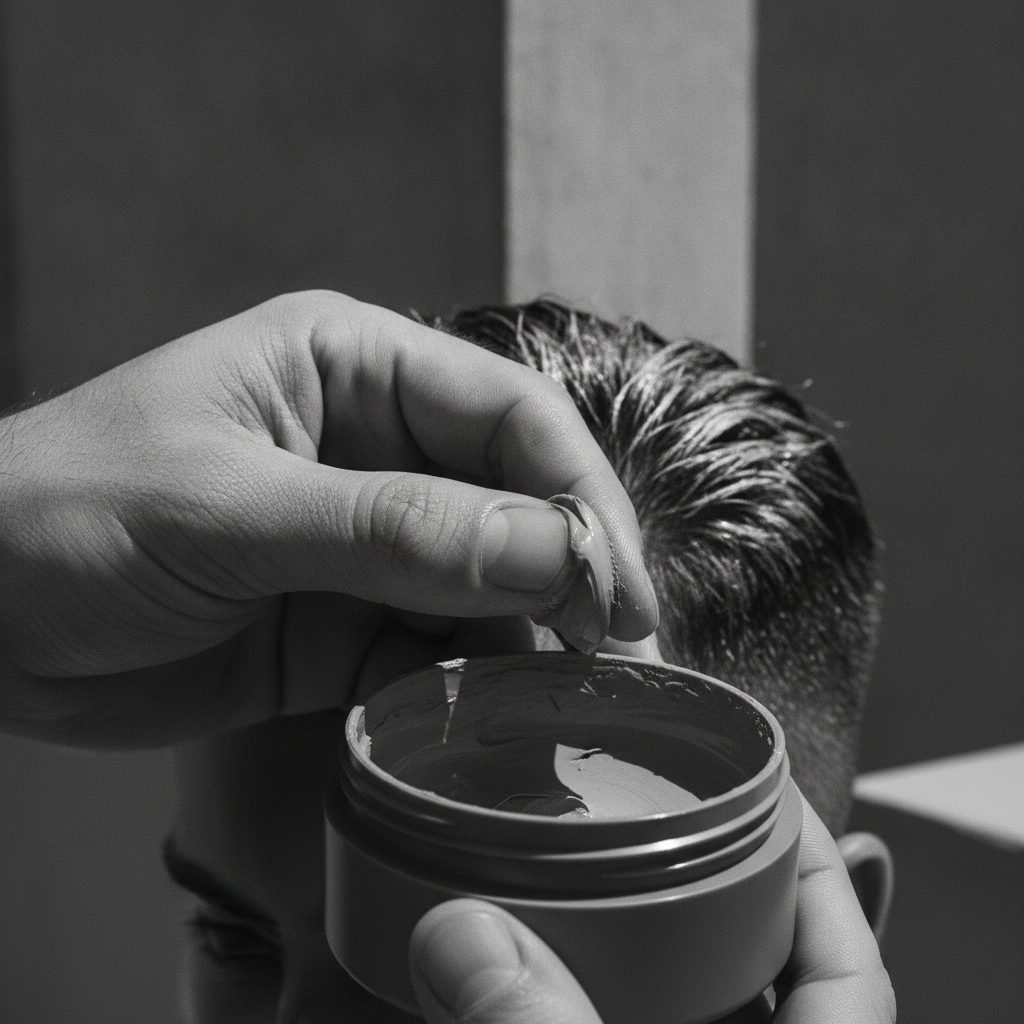
Pomade is one of the oldest styling technologies in men's grooming — and also one of the most misunderstood. The category traces its origins to the 18th century, when bear grease and lard were the primary fixatives for sculpted wigs and powdered coiffs. By the early 20th century, petroleum-derived products like Brylcreem (launched 1929) and Murray's Superior Hair Dressing Pomade defined the barbershop era: heavy mineral oil bases, high shine, and hold that survived a twelve-hour shift without moving. The trade-off was a product that required multiple shampoo passes to remove and left residue on pillowcases.
The modern water-based reformulation that began in earnest during the 1990s and accelerated through the 2010s changed the fundamental chemistry. Polymer film-forming agents replaced petroleum grease, glycerin and PEG derivatives introduced workability and reworkability, and single-shampoo washout became the standard expectation. In 2026, the pomade market spans a full spectrum — from barbershop-faithful oil-based options to sophisticated water-activated polymer gels that behave more like hybrid styling creams.
Choosing correctly is not about brand prestige. It is about matching the chemistry to your hair's diameter, porosity, and natural oil production. A thick petroleum pomade on fine hair will collapse it flat; a lightweight water-based formula on coarse, thick hair will lose its hold by noon. This guide maps the formulation science to five ranked products that cover the full range of modern pomade use cases.
Water-Based vs Oil-Based Pomade — The Chemistry
The distinction between water-based and oil-based pomade is not merely one of convenience — it reflects fundamentally different hold mechanisms operating at the polymer and molecular level.
Water-based pomades rely on film-forming polymers suspended in an aqueous carrier. The most common actives are polyvinylpyrrolidone (PVP) and acrylate copolymers — the same class of ingredients used in professional styling gels. When water evaporates after application, these polymers cross-link around hair strands, forming a flexible film that holds the cuticle layer in position. The hold is structural: it is the polymer matrix, not the lubricant, doing the work. Because water is the carrier, these formulas dilute and lift with warm water alone, making single-shampoo or even water-only removal straightforward.
Oil-based pomades — typically built on petrolatum, mineral oil, beeswax, or lanolin — operate by a different mechanism. Rather than forming a rigid polymer film, they coat the hair shaft with a hydrophobic lubricant that weighs individual strands into position and creates cohesion through surface tension between adjacent hairs. The hold is softer and more malleable throughout the day, but because petrolatum is hydrophobic by design, it resists water and surfactants — multiple shampoo cycles (or clarifying shampoos) are often required for full removal. Lanolin-based formulas sit between these poles: lanolin is a wax ester closer in structure to human sebum, so it conditions while it holds, and it is more water-dispersible than petrolatum, though still not as easy to wash out as a true water-based product.
The practical implications: water-based formulas are better for daily-use styling, gym schedules, and anyone who shampoos frequently. Oil-based formulas are better for all-day or multi-day hold, particularly in barbershop classics like the slick-back or pompadour where prolonged shine and controlled weight are valued more than easy removal.
Hold vs Shine — The Trade-Off Matrix
Hold and shine exist in partial tension in pomade formulation, but the relationship is more nuanced than a simple inverse. Understanding what drives each variable lets you predict product behavior from an ingredient list.
Shine is primarily a function of the refractive index of the product film left on the hair surface. High-shine pomades use ingredients that produce a smooth, reflective coating — mineral oil, petrolatum, castor oil, and in water-based formulas, glycerin and certain silicone derivatives. The smoothness of the cuticle surface amplifies shine: anything that seals or plasticizes the cuticle will increase light reflectance. This is why traditional oil-based pomades produce the highest gloss — the petrolatum film is continuous, smooth, and highly refractive.
Hold strength increases with wax and polymer concentration. In water-based products, more PVP or acrylate polymer produces a stiffer, less flexible film — useful for firm-hold styles but at the cost of some shine, because a rigid polymer matrix scatters light differently than a smooth oil film. Beeswax and carnauba wax in oil-based products add structure but also opacity, which reduces the mirror-like shine of a pure mineral oil formula.
Reworkability — the ability to re-shape a style mid-day by adding heat from your palms or a small amount of water — is almost entirely driven by glycerin content and humectant activity. Glycerin is hygroscopic: it draws ambient moisture to the product film, keeping it partially pliable rather than fully cured. This is why Layrite and Suavecito, both glycerin-forward water-based formulas, are notably reworkable. High-hold polymer formulas with less glycerin tend to set harder and resist re-manipulation. Oil-based pomades are inherently reworkable because the oil never fully "dries" — the lubricant remains mobile at body temperature — which is why pompadour stylists favor them for extended sessions at the barber chair.
Which Pomade for Which Hair Type
Hair type is the first filter before any brand consideration. The same formula will behave entirely differently depending on hair diameter, density, and natural oil levels.
- Fine hair requires lightweight formulas with minimal oil content. Heavy waxes and petrolatum will flatten fine strands and make hair look greasy rather than styled. Water-based pomades with moderate polymer concentration are ideal — enough film-forming activity to hold structure without weighing individual strands down. Look for formulas explicitly labeled medium or light hold, and apply to nearly dry (not wet) hair for maximum volume retention.
- Thick or coarse hair can absorb more product and demands firmer hold formulas. Coarse hair has a larger cortex and often more natural resistance to deformation, meaning a medium-hold product that controls fine hair may have negligible effect on a thick, high-density head. Medium-firm or firm-hold formulas — higher wax or polymer concentration — are appropriate. Baxter of California's kaolin clay formulation is purpose-built for this use case.
- Curly or wavy hair benefits from moisture-rich formulas that define curl pattern without creating crunch or separating strands into stiff individual pieces. Glycerin-heavy water-based pomades are compatible with the Curly Girl method's principles — they add definition while maintaining moisture balance. Avoid high-wax or petrolatum formulas, which can disrupt curl pattern by sealing out humidity the hair needs for shape memory.
- Thinning or low-density hair should avoid anything that creates visible buildup or clumping. Lightweight water-based pomades applied to pre-dried hair add texture and hold without drawing attention to areas of reduced density. Matte-finish clay-pomade hybrids can add texture that creates the illusion of volume; high-shine formulas on thinning hair tend to emphasize scalp visibility.
The Five Best Hair Pomades for Men in 2026 — Ranked
RANK 1 — Suavecito Pomade Original Hold — Best All-Around Water-Based
Suavecito's Original Hold formula has become a benchmark in the modern water-based category for a straightforward reason: it executes its core chemistry without overreach. The base is built around water, PVP, and a balanced glycerin load that gives it genuine reworkability — you can reshape a slick-back three or four hours into wear with nothing more than the heat from your palms. Shine output is high, driven by glycerin's hygroscopic surface effect and a clean emulsifier package that produces a smooth, continuous film on the cuticle rather than a particulate matte deposit. Washout is complete with a single mild shampoo pass. At approximately $12 for a 4 oz. jar, it represents the best cost-to-performance ratio in the category and is well-suited to medium-texture hair in need of a reliable daily-use hold formula.
RANK 2 — American Crew Pomade — Best for Conditioning Hold
American Crew's Pomade distinguishes itself from the water-based field through its lanolin base, which positions it closer to the traditional oil-based formulation while still being water-dispersible enough for practical daily use. Lanolin — a wax ester secreted by sheep sebaceous glands — has a fatty acid profile that mimics human sebum closely enough to be absorbed by both skin and the hair cortex, meaning this formula conditions while it holds. The shine is high and notably wet-looking compared to water-based competitors, driven by the lanolin and mineral oil component's high refractive index. Hold is medium and malleable throughout the day, making it better for classic structured styles that don't need to survive wind or physical activity than for extreme precision styling. At approximately $16, it is a justified upgrade for men with dry or color-treated hair who want conditioning activity from their styling product.
RANK 3 — Baxter of California Clay Pomade — Best for Thick or Coarse Hair
Baxter of California's Clay Pomade occupies the hybrid category between traditional pomade and styling clay — a segment that has expanded significantly as demand for matte-finish, high-hold products among men with thick or coarse hair has grown. The active material is kaolin clay, a naturally occurring aluminum silicate with high surface area and absorbency. Kaolin works by binding to the hair shaft and absorbing excess sebum from both the hair and scalp, which simultaneously increases texture, adds grip for hold, and prevents the heavy-loaded-look that excess oil creates on high-density hair. The result is medium-firm hold with a genuinely matte finish — the clay's particulate structure scatters light rather than reflecting it, producing the low-shine output that distinguishes it from every other product on this list. Apply to slightly damp hair for maximum workability; once fully dry, the hold is resistant to humidity. At $22, it is the most expensive product reviewed here but the most technically differentiated for its target use case. For a deeper analysis of clay-based styling agents, see our guide to the best hair clay for men.
RANK 4 — Layrite Original Pomade — Best Barbershop-Authentic Formula
Layrite was formulated to replicate the aesthetic of traditional petroleum pomades while using a water-soluble base — an engineering brief that shapes nearly every aspect of the formula. The scent is the most immediately distinctive feature: a clean vanilla fragrance that references mid-century barbershop culture without being heavy. Formulation-wise, Layrite Original uses a water-activated polymer system with a high glycerin fraction, which is what gives it its characteristic workability. Unlike many water-based pomades that require re-wetting to rework, Layrite responds well to the moisture present in warm palms alone. Hold is medium and behaves more like a traditional pomade than a gel — it deforms under pressure and re-sets as it cools, rather than cracking like a high-PVP formula under stress. The shine is high and wet-looking, achieving the slicked aesthetic of an oil-based product without the washout penalty. Its water-soluble nature means it rinses clean with warm water, making it the most barbershop-compatible formula in the water-based category.
RANK 5 — Uppercut Deluxe Pomade — Best for Firm Hold with High Shine
Uppercut Deluxe positions itself at the intersection of firm hold and high shine — a combination most competing products sacrifice one or the other to achieve. The water-based formula incorporates coconut oil as a conditioning and slip agent, which moderates the stiffness of the high-concentration polymer system and prevents the product from setting into a brittle, cracking film. Coconut oil's low molecular weight allows partial penetration of the hair cortex rather than pure surface coating, meaning there is a genuine conditioning benefit alongside the hold mechanism. Shine output is among the highest of any water-based product reviewed here — the coconut oil and smooth emulsifier base produce a reflective surface comparable to many oil-based formulas. Firm hold makes it better suited to precision styles — pompadours, structured side parts, defined waves — that require the hair to stay in an imposed shape for an extended period. Application on towel-dried hair allows the polymer system to activate fully; applying to dry hair reduces hold strength. Washout is clean in a single shampoo pass.
Comparison Table — All Five Products
| PRODUCT | BASE | HOLD | SHINE | PRICE |
|---|---|---|---|---|
| Suavecito Original Hold | Water-based (PVP) | Medium | High | ~$12 |
| American Crew Pomade | Lanolin / mineral oil | Medium | High | ~$16 |
| Baxter of California Clay Pomade | Water-based (kaolin clay) | Medium-Firm | Matte | ~$22 |
| Layrite Original Pomade | Water-soluble (glycerin-high) | Medium | High | ~$16 |
| Uppercut Deluxe Pomade | Water-based (coconut oil) | Firm | High | ~$20 |
How to Apply Pomade Correctly
Application technique directly determines hold performance and style longevity regardless of which formula you choose. The most common error is applying too much product to wet hair — this dilutes the polymer concentration, reduces hold strength, and increases dry time significantly. The second most common error is distributing product unevenly, which creates patches of hold and patches of no hold that become visible once styling is complete.
Amount: Start with less than you think you need. A pea- to dime-sized amount is appropriate for most medium-length styles. Product can always be added in a second pass; excess product on hair is much harder to correct without a full re-wash. For longer or thicker hair, scale up incrementally — a nickel-sized amount maximum before reassessing whether you need more.
Heat activation with palms: Scoop product from the jar using the back of your fingernail or a clean spatula to avoid contaminating the jar with water. Place the product in one palm and rub both palms together firmly for five to ten seconds. The friction heat — typically sufficient to bring pomade to body temperature — reduces viscosity in wax-based formulas and improves distribution in polymer formulas. For clay pomades, this step is especially critical: cold kaolin-based products distribute unevenly and can create clumps in the hair.
Application direction: Apply first to the back and sides, then work product through to the front section. Fingertips should move in the intended direction of your finished style — not against the grain. For pompadours and quiffs, direct hair backward and upward from the front; for side parts, sweep laterally from the part line. Once product is distributed, use a comb or brush to define the final shape. A fine-tooth metal comb will produce the crispest part lines; a boar bristle brush will blend product more evenly for softer results.
Damp vs dry application: Water-based pomades with polymer systems perform best on towel-dried or blow-dried hair that retains about 20–30% moisture — this activates the polymers and allows them to set around hair strands as they dry. Oil-based and lanolin formulas are more tolerant of fully dry hair because the lubricant base does not require water evaporation to achieve hold. Clay pomades perform best on nearly dry hair, where the clay particles can grip the hair shaft without being diluted by excess water.
Final Assessment
The pomade category in 2026 is deep enough that there is no universal best product — only the best product for a given hair type and style objective. For most men styling medium-texture hair into classic looks that require easy daily reset, Suavecito Original Hold sets the value benchmark. For conditioning-forward barbershop aesthetics, American Crew Pomade's lanolin base adds a dimension of hair health that pure polymer formulas cannot replicate. For thick or coarse hair demanding structure and a matte finish, Baxter of California Clay Pomade is the technically correct choice. For reworkability and barbershop-faithful feel in a water-soluble formula, Layrite Original is difficult to beat. And for maximum hold with high shine from a water-based product, Uppercut Deluxe delivers.
If your styling routine extends to texture and matte-finish products, read the full analysis in our best hair clay for men guide — clay and pomade are complementary tools that address different points on the hold/shine matrix. For a complete overview of the Blade Concept hair protocol library, visit the Hair Protocols Hub.