Most shaver comparison articles focus on brand names and star ratings. We're going to do something different: examine the actual engineering. The oscillation frequency. The cutting geometry. The skin biology. Because once you understand how each technology works at a mechanical level, the right choice for your face becomes obvious.
How Foil Shavers Work
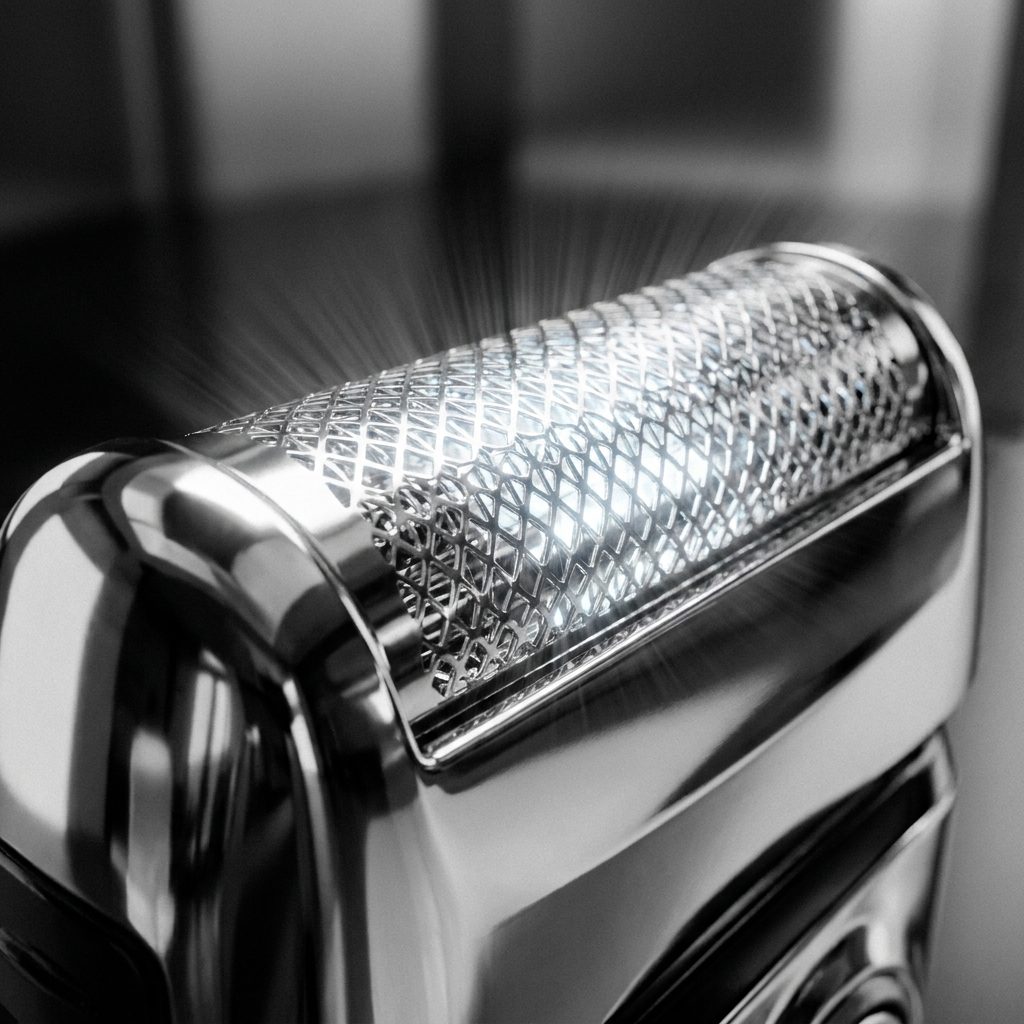
Foil shavers use a thin perforated metal screen — the foil — stretched over one or more oscillating cutting blades. The foil's holes capture individual hairs and guide them toward the blade below. The cutting element oscillates at up to 14,000 cutting strokes per minute in premium models like the Braun Series 9 Pro+, powered by a linear motor that moves the blade in a precise back-and-forth motion.
The foil geometry is precisely engineered: different hole shapes capture hairs growing at different angles. Longer, oval apertures catch flat-lying hairs; smaller circular perforations lift short, flat stubble. This multi-aperture design allows a single pass to address hair growing in multiple directions.
The contact surface between foil and blade operates at micron-level tolerances. The foil acts simultaneously as a hair guide, a guard against direct blade-to-skin contact, and a distributed pressure surface. This last function is critical: by spreading cutting force across multiple contact points, foil shavers dramatically reduce the pressure per unit area on the skin — a core reason they cause less irritation than rotary designs in sensitive skin types.
How Rotary Shavers Work
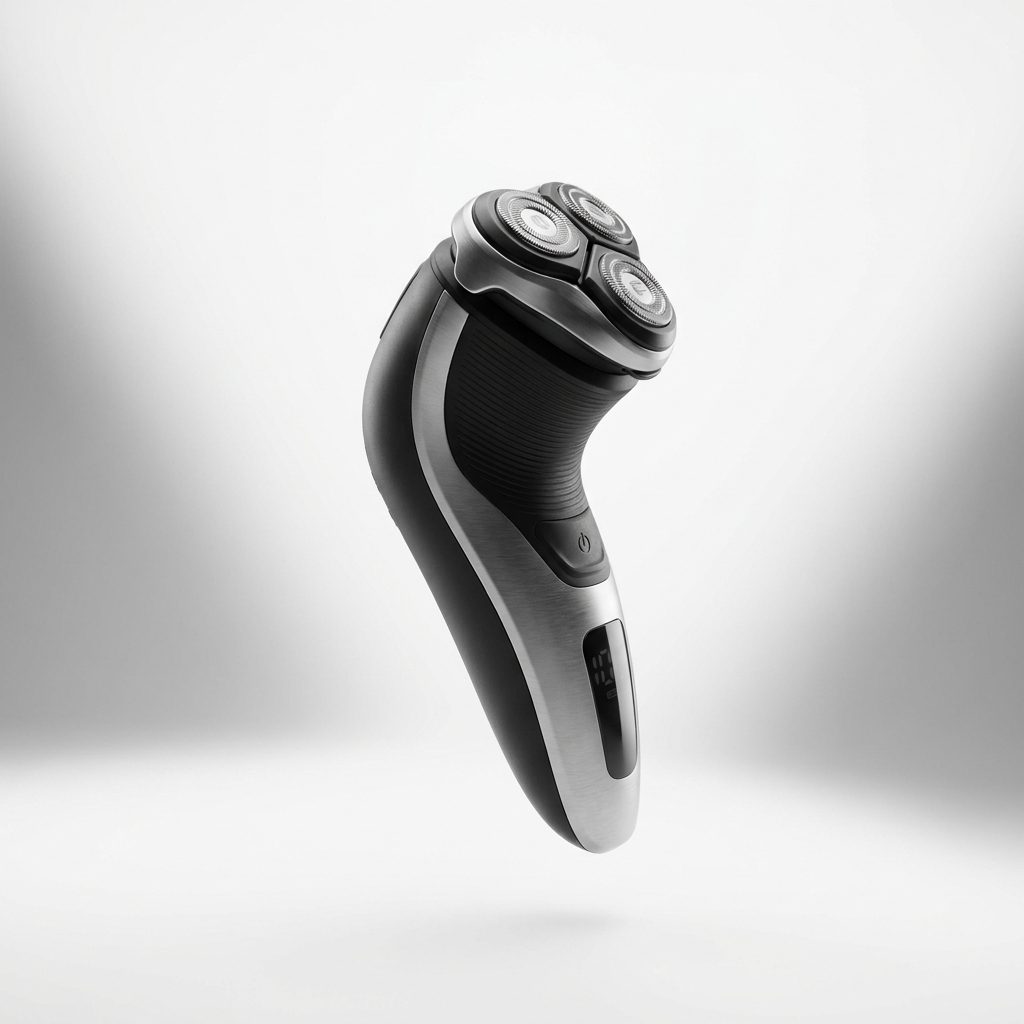
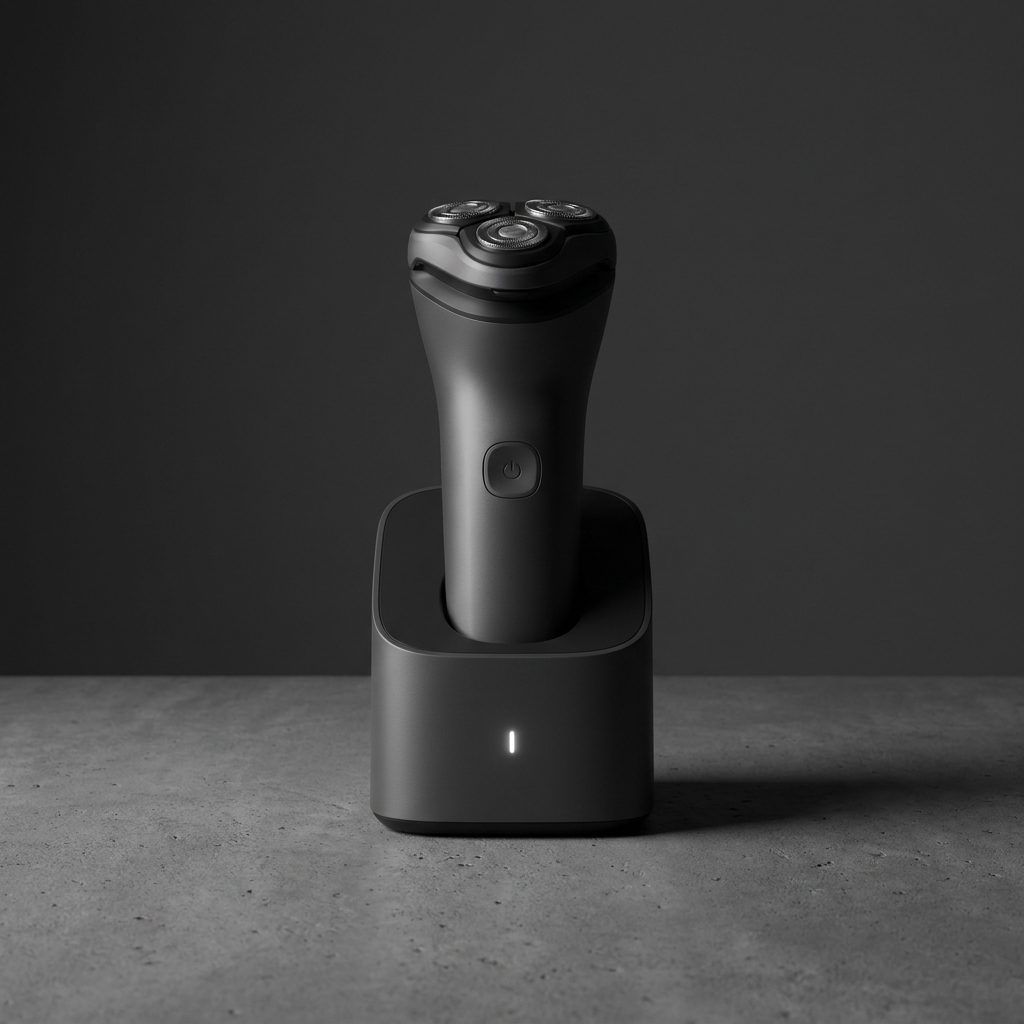
Rotary shavers use a fundamentally different cutting geometry. Three (or occasionally four) circular heads spin continuously, each containing an inner cutter rotating inside a slotted guard ring. As the guard ring lifts hairs, the inner cutter — spinning at around 8,000 RPM in premium models — shears them at the base.
The key advantage of the rotary design is contour-following. Each head can flex independently, typically across 8 or more degrees of movement. This allows the shaving head to maintain consistent contact across the curved surfaces of the jaw, chin and neck simultaneously — something a rigid foil head geometry struggles to replicate.
The cutting motion in a rotary shaver is circular rather than linear, which suits multi-directional beard growth naturally. Hairs growing in curved or swirling patterns — common on the neck — align more naturally with the circular cutting path of the rotary head.
The Skin Science
Understanding how each format interacts with skin biology is essential to making the right choice. Shaving is, by definition, a controlled form of mechanical exfoliation — you're not just cutting hair, you're removing a thin layer of the stratum corneum with every stroke.
Foil shavers cause less disruption to this outer skin barrier for a specific reason: the foil screen acts as a physical barrier between blade and skin. The cutting event happens inside the foil architecture, not at the skin surface. This means reduced mechanical trauma to the epidermis per stroke.
Rotary shavers, with their direct guard-ring-to-skin contact and the suction effect of the spinning inner cutter, create a slightly higher-friction interaction with the skin surface. For most skin types this is negligible. But for genuinely sensitive skin — particularly those prone to folliculitis or razor bump formation — the reduced contact mechanics of foil shaving offer a measurable advantage.
Post-shave sebum redistribution is also affected by shaving format. The mechanical action of both foil and rotary shavers redistributes sebum across the shaved surface, which aids natural barrier function recovery. However, the multi-directional passes often needed with rotary shavers can increase total skin contact time and therefore total sebum disruption.
Which to Choose
By Beard Type
Straight growth: Foil excels here. Linear oscillating blades are geometrically optimized for hairs growing in a consistent direction — a single pass captures the majority of hairs without requiring the circular motions needed to address multi-directional growth.
Multi-directional growth: Rotary. The circular cutting path handles curved and swirling beard growth more efficiently, following the natural arc of the hair without requiring multiple angle changes.
By Skin Type
Sensitive skin, prone to irritation, folliculitis or razor bumps: Choose foil. Reduced direct skin contact means lower inflammation risk, less mechanical disruption to the stratum corneum, and fewer passes required to achieve a close result.
Normal to resilient skin: Either format performs comparably. Your beard growth pattern and face shape should drive the decision.
By Face Shape
Angular jawline, flat cheeks: Foil's rigid head design is a better geometric match for flat and gently curved surfaces.
Rounded face, prominent chin, complex curves: Rotary's independent flexing heads maintain contact across compound curves more effectively.
By Lifestyle
Precision, closeness, daily use: Foil, particularly if you use a travel-capable model with a quality cleaning station.
Speed, multi-day beard trim-down, travel flexibility: Rotary's self-contained circular heads can shave faster over larger surface areas.
Our Top Picks
The foil vs rotary debate has a correct answer — but only once you know your own beard growth pattern, skin sensitivity, and face geometry. For most men with straight beard growth and sensitive skin, foil is the engineering-correct choice. For those with complex curves and multi-directional growth, rotary solves problems foil cannot. Explore our full shaving guides at the Shave Protocol or read our in-depth Braun Series 9 Pro+ review for the full specification breakdown.