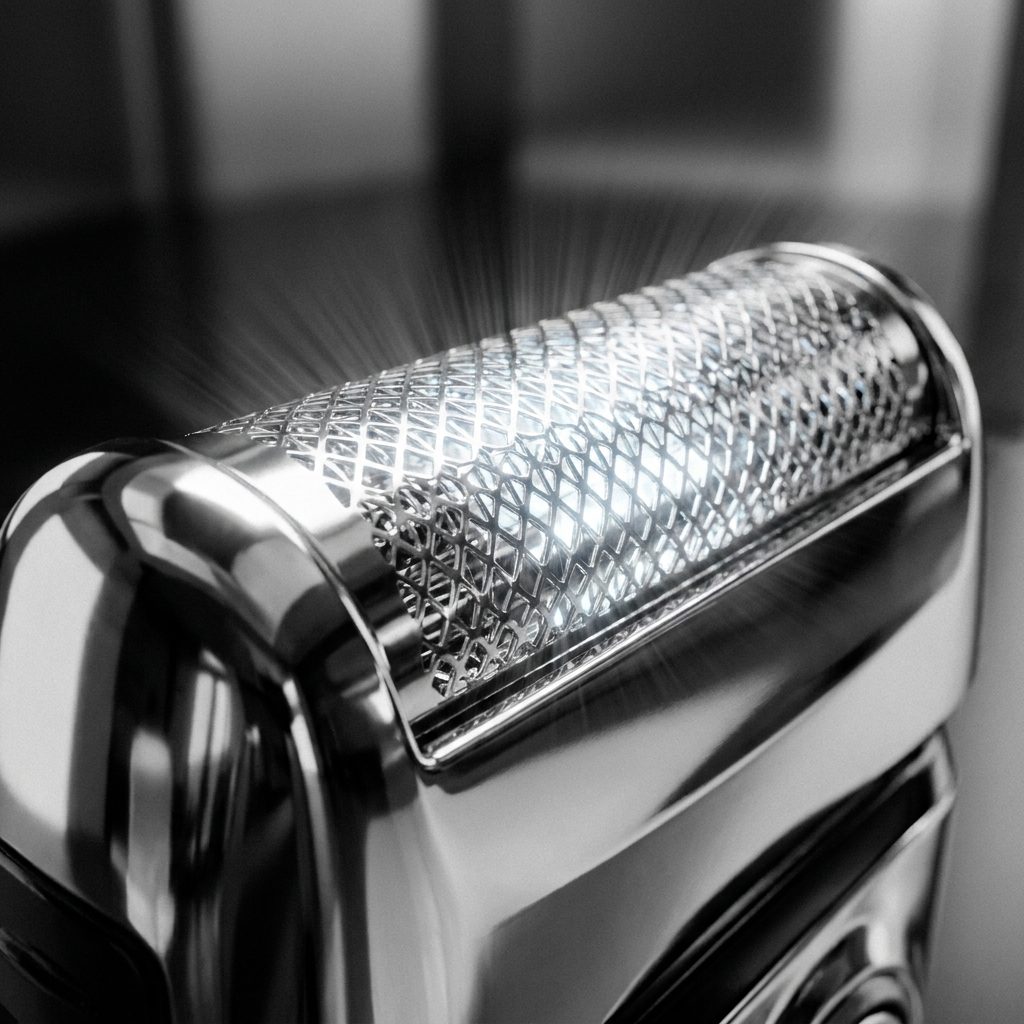
Philips OneBlade Review 2026 — The Hybrid Shaver That Changed Everything
What Is the Philips OneBlade?
When Philips launched the OneBlade in 2016, the grooming press didn't know what category to put it in. It wasn't an electric foil shaver. It wasn't a rotary. It certainly wasn't a cartridge razor. A decade later, "hybrid shaver" has become the accepted term — but even that undersells how genuinely different the underlying engineering is.
The core innovation is the dual-protection blade: a thin stainless steel cutter that moves side to side at 12,000 cutting motions per minute, protected by what Philips calls a dual protection system — a glide coating plus rounded tips — that keeps the cutting edge off the skin. The geometry is precise, and it makes nicks and cuts far less likely than with an exposed blade. That single engineering decision is what separates the OneBlade from everything else on the shelf.
The blade can be used in three ways: flat against skin for a close shave, angled to edge a beard neckline with precision, or fitted with one of the comb attachments to trim to a specific length. One device handles what most men have three different tools for. Current models use Philips' 360 Blade, which flexes in all directions to keep contact with the skin on curves. Philips rates each stainless steel blade for up to four months of use.
OneBlade Face vs OneBlade Pro 360
Philips currently sells several OneBlade variants; the two we link are the OneBlade 360 Face with Connectivity at around $35, which covers the essentials, and the OneBlade Pro 360 Face + Body (QP6542) bundle with a travel case at around $72, which adds the finer length control and body kit. Both are sold by Amazon. Here is how they compare:
| Feature | OneBlade 360 Face (Connectivity) | OneBlade Pro 360 Face + Body (QP6542) |
|---|---|---|
| Motor speed | 12,000 cuts/min | 12,000 cuts/min |
| 360 flexing blade | Yes — 360 blade | Yes — 360 blade |
| Comb included | 5-in-1 comb, 1–5 mm | 14-length comb, 0.4–10 mm |
| Battery life | 60 minutes | 90 minutes |
| Waterproof | Yes — 100% showerproof | Yes — 100% showerproof |
| Price | $35 | $72 |
Both now use the flexing 360 Blade, so contour-following is no longer the dividing line. The Pro's advantage is its 14-length comb (0.4–10 mm), which gives you far more stubble and short-beard settings, plus the face-and-body kit and the travel case. The Face counters with Bluetooth connectivity — the OneBlade app gives blade-change and charging guidance — a 60-minute battery, a 5-in-1 comb (1–5 mm) and a warranty of up to five years. If you keep a precise stubble length or groom body hair, the roughly $37 difference buys the Pro. If you mainly shave and keep light stubble, the Face handles the job fine.
Which OneBlade Should You Buy?
Philips sells the OneBlade in several kits. All of the ones below use the 360 Blade and are sold by Amazon; prices were checked on Oct 4, 2026.
| Model | What you get | Price |
|---|---|---|
| OneBlade 360 Face | 5-in-1 comb (1–5 mm) | $30 |
| OneBlade 360 Face with Connectivity | 5-in-1 comb, app, 60-min battery | $35 |
| OneBlade 360 Face + Body | Face + body blades, 3 mm body comb, 60-min battery | $40 |
| OneBlade Pro 360 Face + Body | 14-length comb (0.4–10 mm), body kit, 90-min battery | $60 |
| OneBlade Pro 360 Face + Body + case | Same as Pro 360, plus a travel case | $72 |
Our pick for most men: the OneBlade 360 Face + Body at about $40 — it adds the body blade, 3 mm comb and skin guard for only a few dollars more than the Face kit. If you keep a precise stubble length, step up to the Pro 360 for its 14 length settings.
Performance: What to Expect
Shave Closeness
Within the sweet spot — stubble between one and two days of growth — the OneBlade is genuinely excellent. The oscillating blade cuts efficiently at that length, the guard maintains light skin contact, and you can go over the same area multiple times without building irritation the way a foil shaver would. The result is a clean, close finish with no weepers.
At day-old or lighter stubble, be honest: the OneBlade will miss fine hairs, particularly on the upper lip and along the philtrum. The blade guard that makes the device safe also limits how flat the blade sits against very fine, flat-lying hair. You can compensate by shaving against the grain on the final pass, which the guard makes comfortable, but you will not achieve the same result as a fresh DE blade. It is not designed to cut at skin level the way an exposed blade does. For a baby-smooth finish, a traditional razor remains the tool of choice. For every other use case — stubble maintenance, regular cleanup, body grooming — the OneBlade competes seriously.
The Wet Shave Experience
The OneBlade 360 Face is 100% showerproof and works wet or dry and Philips lists the Pro 360 Face + Body (QP6542) as 100% showerproof too. Used in the shower with shaving gel or foam, this is one of the OneBlade's most underrated qualities: the combination of a lubricated skin surface and the protected blade creates a glide feel that conventional electric shavers don't offer, and gel reduces drag further.
Men coming from cartridge razors typically have their strongest first reaction here. The familiar ritual of cream and lather is preserved. The difference is a much lower risk of nicks, no need for careful blade angle management, and a faster shave. Owners with sensitive skin commonly report calmer post-shave skin than with cartridges.
Body Grooming Versatility
Comb options depend on the model. The Pro 360 Face + Body comes with a 14-length comb (0.4–10 mm) for faces plus body attachments to trim and shave body hair; the Face model has a 5-in-1 comb (1–5 mm) for stubble and short beards. On the chest, stomach and legs, a longer setting is the practical choice for general reduction — enough to look groomed without the maintenance commitment of going fully bare — and the protected blade takes the anxiety out of using a blade on awkward body geometry.
If body grooming matters to you, buy the Face + Body version we link rather than the Face model: the Face kit includes only the face blade and comb.
Blade Longevity and Running Cost
Philips rates each blade for up to four months of use, though daily users may find performance drops sooner. On the Face model, the OneBlade app tracks usage and tells you when to change the blade.
At that interval you need about three blades a year. Philips sells a genuine 3-pack of OneBlade 360 blades — rated for up to 12 months between them — for about $30, sold by Amazon, so a year of blades costs roughly $30. That is well below a premium cartridge habit — 5-blade cartridges at $4–5 each, replaced weekly, run $200+ per year.
6-Category Score
Outstanding on 1–2 day stubble. Fine hairs on the upper lip can require a second pass against the grain. Not a BBS competitor.
The dual-protection guard makes nicks and weepers virtually impossible. Most sensitive skin tolerates the OneBlade well.
Lightweight plastic construction feels appropriate for the price. The handle grip is secure when wet. Comb attachments click in firmly. Nothing feels premium, but nothing feels cheap either.
Shaves, edges, and trims. Wet or dry. Face and body. Adjustable comb lengths. Few tools at this price bracket come close to this functional range.
About $35–$72 upfront, then roughly three blades a year. Against a weekly cartridge habit, the long-term economics are strong.
The Face lists a 60-minute runtime, enough for weeks of daily shaves between charges. Both charge from a USB-A cable rather than USB-C, which is the main complaint.
OneBlade vs Traditional Alternatives
| Category | OneBlade | Cartridge Razor | Electric Foil Shaver | Safety Razor |
|---|---|---|---|---|
| Shave closeness | Close (not skin level) | Closest (skin level) | Close (skin level) | Closest (skin level) |
| Cost per year | ~3 blades | $200+ | Foil heads ~$40/yr | ~$12 |
| Learning curve | None | Minimal | None | Moderate — blade angle critical |
| Wet shave support | Full — foam/gel compatible | Yes | Dry recommended; some wet-capable | Yes |
| Skin irritation risk | Very low — protected blade | Moderate — tugging on old blades | Low | High for beginners |
Science: The Dual-Protection Blade
The OneBlade's comfort is a matter of geometry. Philips' dual protection system combines a glide coating with rounded tips on the blade, so the cutting edge meets hair while staying off the skin. That is why nicks and weepers are rare compared with an exposed razor blade.
The oscillating motion — 12,000 lateral strokes per minute — is fundamentally different from rotary electric shaver mechanics. Rotary cutters pull hair into a circular aperture and shear it in a chopping action; they work best on longer hair and can tug or grab at skin if the cutter foils are worn. The OneBlade's side-to-side oscillation is more analogous to a fine-tooth saw: the blade contacts hair tangentially, shearing it cleanly at the guard height without requiring the hair to be captured in a housing first.
This mechanics also explains why the OneBlade handles two-day stubble better than most foil shavers: foil shavers require short hair to pass through a perforated foil before the inner blade cuts it, and hairs above approximately 1.5mm are too long to feed through consistently. The OneBlade has no such intake constraint. It cuts at whatever height the guard is set to, directly on contact.
Blade life is the one consumable to plan for. Philips rates the stainless steel 360 Blade for up to four months of use; when you notice more tugging, it's time to change it, and the Face model's app gives blade-change reminders based on your use.
- You maintain 1–3 days of stubble and want fast, consistent results daily.
- You have reactive or sensitive skin and cartridge razors give you persistent irritation.
- You want one device for face shaving, beard edging, and body grooming.
- You travel frequently and want something waterproof that clears security without a blade-related issue.
- You are spending over $100/year on cartridge refills and want a one-time device investment.
- You want a baby-smooth, skin-level shave — the guard prevents that by design.
- You shave only every 5–7 days and have dense, coarse hair — the OneBlade can struggle at week-growth lengths on thick beards.
- You prefer the tactile ritual and control of traditional wet shaving with a safety razor.
- You care deeply about premium build quality — the plastic chassis will not satisfy those standards.
Affiliate links — we earn a commission at no extra cost to you. Disclosure. Rankings are based on specification analysis, not hands-on testing — how we evaluate. Prices last checked on Amazon on Sep 26, 2026 and rounded to the nearest dollar; they change often, so the button shows today's price.
Frequently Asked Questions
Is the Philips OneBlade worth it?
For stubble, beard edging and body grooming, yes: it is fast, hard to cut yourself with, and costs about $30–$72. For a baby-smooth shave, a safety razor or foil shaver still cuts closer.
How long does a OneBlade blade last?
Philips rates each blade for up to four months; its 3-pack is rated for up to 12 months. Change sooner if it starts to pull.
Which OneBlade is best?
The OneBlade 360 Face + Body for most men. The Pro 360 is worth it if you want 14 precise stubble lengths and a 90-minute battery.
Can you use the OneBlade in the shower?
Yes. Philips lists the OneBlade 360 Face and the Pro 360 Face + Body as 100% showerproof, and they work with or without foam.
Does the OneBlade shave as close as a razor?
No. Its guarded blade is designed not to cut at skin level, which is why it rarely nicks. It leaves a very short, clean stubble rather than a baby-smooth finish.