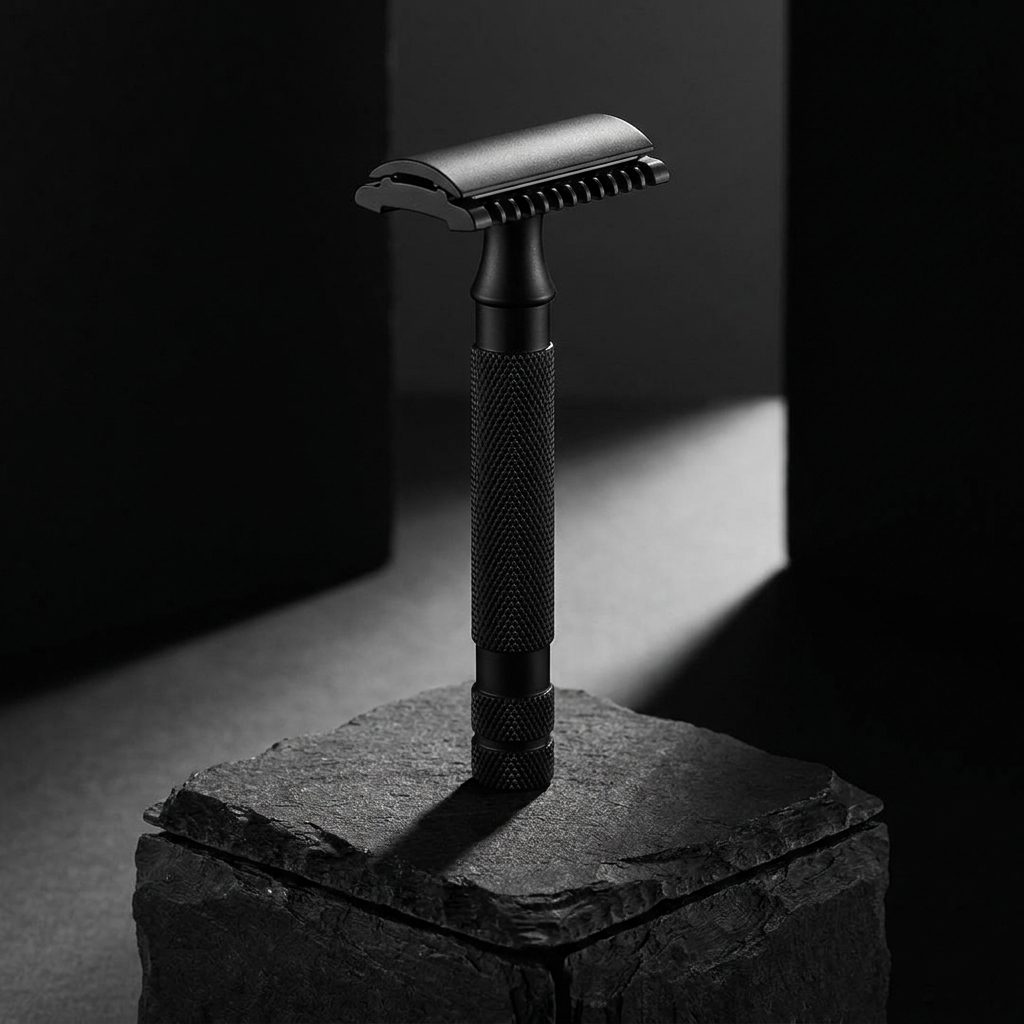
Safety razors are undergoing a precision renaissance. Engineers, minimalists, and anyone who has thought critically about their morning routine are turning away from multi-blade cartridge systems and returning to the double-edge razor — not out of nostalgia, but for measurable, defensible reasons. Single-blade geometry produces a categorically different shave. The blade angle physics are more controllable. The cost-per-shave economics are incomparable. A premium safety razor purchased today will outlast any subscription cartridge system by decades, and the blades — at roughly $0.10 to $0.30 each — cost a fraction of even the cheapest cartridge refills.
This guide does not rank by brand recognition or marketing spend. It ranks by the variables that actually matter: blade geometry, weight distribution, head design, material quality, and the resulting shave performance. Every razor on this list has been evaluated against those criteria as of April 2026.
Why Safety Razors Outperform Cartridges — The Physics
The case against cartridge razors is mechanical. Multi-blade systems operate on the "hysteresis effect": the first blade lifts a hair slightly above the skin surface, the second cuts it, and the hair then retracts below the skin line. Repeat across three, four, or five blades and you have a system that is actively designed to cut hair below the surface of the skin. For men with curly or coarse facial hair, this is the primary cause of ingrown hairs and razor bumps (pseudofolliculitis barbae) — the hair curls back into the follicle wall before it can exit the skin.
A single-blade razor cuts once, at the skin surface. There is no mechanical lift-and-retract cycle. This is not a marginal difference — it is a fundamentally different interaction between blade and follicle.
The 30-degree blade angle principle governs DE shaving. The blade is exposed at a fixed geometry from the razor head — typically 28–32 degrees from the skin surface depending on the model. This angle is engineered to present the blade edge at optimal cutting efficiency while maintaining enough skin contact area to prevent the blade from digging. Blade gap — the distance between the blade edge and the safety bar — determines aggression. A gap of 0.5mm is mild, forgiving, and appropriate for daily shaving on sensitive skin. A gap of 1.0mm or more is aggressive, highly efficient, and demanding of precise technique.
Weight matters for a different reason than most assume. A heavier razor (90g–120g) requires zero hand pressure because gravity provides the cutting force. The blade contacts the skin, the weight of the handle maintains consistent pressure, and the operator's job is simply to maintain angle and direction. This is why safety razor technique is often described as "letting the razor do the work" — because with proper weight and geometry, it genuinely does.
What to Look for in a Safety Razor
Before evaluating specific models, understand the specification variables that determine shave character:
- Weight: The optimal range is 80g–120g. Below 80g and you risk applying compensatory hand pressure. Above 120g and fatigue becomes a factor on longer shaves.
- Blade gap: 0.5mm–0.65mm is mild (suitable for beginners and sensitive skin). 0.65mm–0.85mm is mid-range. 0.85mm–1.1mm is aggressive (thick beards, experienced technique only).
- Head type: Closed-comb heads have a straight safety bar — mild, consistent, forgiving. Open-comb heads have a toothed safety bar that parts the hair before the blade — aggressive, efficient for thick beards, less forgiving. Slant bar heads present the blade at an angle for a slicing rather than chopping motion — efficient, specialist.
- Handle length: Standard 75–85mm suits most hand sizes. Longer handles (90mm+) suit larger hands and improve leverage on the neck.
- Handle texture: Knurled handles (diamond or straight-cut pattern) maintain grip with wet, soapy hands. Smooth handles are an engineering oversight.
- Material: Chrome-plated brass is the industry standard — durable, corrosion-resistant, affordable. Stainless steel (CNC-machined) is premium — heavier, more precise tolerances, longer lifespan. Zamak (zinc alloy) is budget — lighter, less durable, acceptable for entry-level.
Best Safety Razors 2026 — The Rankings
1. Merkur 34C Heavy Duty — Best Overall
The Merkur 34C has been the canonical entry-point recommendation for two decades, and that status persists in 2026 because its geometry remains correct. The 34C is a 3-piece chrome-plated brass razor weighing 95g with a 68mm handle featuring diamond-knurled grip. The closed-comb head presents a blade gap of 0.68mm and a blade angle of approximately 31 degrees — mild enough to be forgiving for beginners, precise enough to satisfy experienced DE shavers indefinitely.
What the Merkur 34C represents is engineered conservatism. Solingen, Germany manufacturing since 1896 means the tolerances are consistent across production runs — a 34C purchased today will shave identically to one purchased in 2015. The chrome finish is not the thickest on this list, but it is adequate for a razor that will likely see daily use for years.
2. Edwin Jagger DE89 — Best for Sensitive Skin
British-made in Sheffield since 1988, the Edwin Jagger DE89 represents a slightly milder geometry than the Merkur 34C. The chromed brass head sits on a chrome-plated handle in a 3-piece design. Blade gap measures 0.62mm — the tightest on this list excluding adjustable models — making the DE89 the precision recommendation for men who experience persistent neck irritation, razor rash, or have thin, sensitive skin.
The DE89's chrome finish quality noticeably exceeds the Merkur at this price tier. The head design is Edwin Jagger's proprietary geometry, developed through iterative testing rather than licensed from a generic manufacturer. The handle is 84mm — slightly longer than the 34C — and the knurling pattern is finer, which suits medium-to-smaller hands. The DE89 is the starting point for any man whose skin reacts adversely to more aggressive geometry.
3. Rockwell 6C — Best Adjustable Under $100
The Rockwell 6C solves a genuine problem: most men beginning DE shaving do not yet know their optimal blade gap. The 6C provides six interchangeable baseplates delivering blade gaps from 0.35mm (plate 1, extremely mild) to 0.9mm (plate 6, aggressive). The engineering-correct approach is to start at plate 2 and increase one plate every two weeks until the combination of closeness and irritation finds equilibrium — then stay there.
The chrome-plated zinc alloy construction is honest at this price point. This is not a heirloom-quality instrument, but the geometry is consistent and the interchangeable baseplate system is genuinely useful for both new and experienced shavers who shave different beard areas at different aggression levels. At $60, the 6C represents the best value in adjustable DE shaving.
4. Feather AS-D2 — Best Premium
The Feather AS-D2 is the precision instrument of safety razors. Manufactured in Japan from stainless steel throughout — no chrome plating, no zinc alloy — the AS-D2 is CNC-machined to tolerances measured in microns. Weight is 119g, perfectly balanced at the midpoint of the handle. The geometry is mild (designed to pair with Feather's own notoriously sharp Hi-Stainless blades, which compensate for the razor's conservatism), blade angle is precise, and the overall shave experience is what "quality" actually means separated from marketing.
The AS-D2 is not the right entry point. It rewards mastered technique. A beginner using a Feather AS-D2 will not get a better shave than a beginner using a Merkur 34C. But for men who have spent months developing DE technique and want the highest-quality instrument available on the market, there is nothing else at this price point that competes on material quality and engineering precision.
5. Muhle R41 — Best Open Comb (Thick Beards)
The Muhle R41 is a specialist instrument. Its open-comb head delivers the most aggressive geometry of any mainstream safety razor: blade gap 1.08mm, blade exposure 0.27mm above the safety comb. For men with heavy, wiry, fast-growing beard growth that mild and mid-range razors struggle to cut efficiently in a single pass, the R41 resolves the problem definitively. One pass WTG on a well-lathered face with the R41 achieves what two passes with a mild razor cannot.
This is not a beginner razor. The R41's aggression means that technique errors — wrong angle, wrong pressure — translate to immediate skin feedback. It requires a confident, consistent hand. Men with sensitive skin or thin facial skin should not use the R41. Men with heavy beards who have mastered DE technique and are frustrated by mild razors not cutting cleanly will find it transformative.
6. Parker 99R — Best Budget
The Parker 99R uses a butterfly-open (twist-to-open) mechanism — the top cap splits open by rotating the handle base, allowing blade loading without disassembly. This makes blade changes faster and easier than 3-piece designs, which matters for beginners still getting comfortable handling DE blades safely. The 99R weighs approximately 98g on a long 101mm handle with aggressive straight-bar knurling, and the blade gap of 0.72mm is slightly assertive for a budget razor.
At $25 the Parker 99R is the most accessible route into DE shaving on this list. The long handle particularly suits men with larger hands who find the shorter Merkur and Edwin Jagger handles difficult to grip. Parker razors are manufactured in India and the quality control is adequate — not exceptional, but consistent enough to recommend at this price tier.
Safety Razor Blades — The Often-Overlooked Variable
The blade is not a commodity decision. The same razor loaded with different blades will produce measurably different shaves, and the interaction between razor geometry and blade sharpness is what produces the final result. A mild razor (Merkur 34C, Edwin Jagger DE89) paired with a very sharp blade (Feather Hi-Stainless) can approximate the aggressive feel of a Muhle R41 with a milder blade. Conversely, an aggressive razor (R41) loaded with a mild blade (Derby Extra) becomes manageable for sensitive-skin users.
The principal blade options as of 2026: Astra Superior Platinum — mild, forgiving, consistent, the best beginner blade at ~$0.10 each. Feather Hi-Stainless — the sharpest widely available DE blade, unforgiving of poor technique, exceptional closeness for experienced users. Derby Extra — mild, budget-priced, some inconsistency between blades in a pack. Gillette Silver Blue — balanced sharpness and smoothness, widely considered the best all-round blade for most razor/skin combinations. Personna Lab Blue — surgical-grade sharpness with a smoother feel than Feather, gaining significant preference among experienced DE shavers since 2024.
Buy a blade sampler pack before committing to a bulk purchase. At $0.10–$0.30 per blade, no single blade specification costs significant money — but finding the wrong one for your skin and beard costs shave quality daily until you change it.
Comparison Table
| Model | Head Type | Weight | Blade Gap | Material | Price | Best For |
|---|---|---|---|---|---|---|
| Merkur 34C | Closed comb | 95g | 0.68mm | Chrome brass | $35 | Overall best / beginners |
| Edwin Jagger DE89 | Closed comb | ~80g | 0.62mm | Chrome brass | $40 | Sensitive skin |
| Rockwell 6C | Closed comb (adjustable) | ~90g | 0.35–0.9mm | Chrome zinc | $60 | Finding ideal aggression |
| Feather AS-D2 | Closed comb | 119g | ~0.65mm | Full stainless | $180 | Premium / experienced |
| Muhle R41 | Open comb | ~85g | 1.08mm | Chrome brass | $55 | Thick/heavy beards |
| Parker 99R | Closed comb (butterfly) | ~98g | 0.72mm | Chrome brass | $25 | Budget / large hands |
How to Switch from Cartridge to Safety Razor
The transition from cartridge to DE shaving requires unlearning one critical habit: applying pressure. Cartridge razors are designed to receive pressure — the spring-loaded guard compensates and the multi-blade system provides redundancy. Safety razors are not. The weight of the razor is the cutting force. Your hand's job is to maintain angle and guide direction, nothing more.
Start with the correct angle. Hold the razor with the cap flat against your cheek, handle parallel to your face. Slowly rotate the handle away from your face until you feel the blade begin to engage — that is approximately 30 degrees. Lock in that muscle memory before you think about anything else.
Map your beard growth before your first shave. Run a fingertip across your unshaved face — the direction that feels smooth is with-the-grain. Always shave WTG on your first pass. Short strokes, 2–3cm maximum. Rinse the blade after every two strokes. Stretch the skin in the opposite direction to your stroke to keep the surface taut.
Cold water rinse at the end. Apply an alum block (potassium alum crystal) across the face and leave 30 seconds — it is an astringent and mild antibacterial, and any irritation spots will reveal themselves. Rinse, apply a fragrance-free moisturizer, and assess. Any persistent redness indicates either too much pressure or too steep a blade angle. Adjust the single variable that changed most and repeat the next day.
"A safety razor doesn't shave harder — it shaves smarter. The geometry does the work."
Most men find that within two weeks of consistent DE shaving, their technique is solid and their skin is visibly improved — less irritation, no ingrown hairs, and a level of closeness that no cartridge system has delivered. The economics are secondary to the quality, but they compound favourably: a quality safety razor purchased once, blades at $0.15 each, and a tube of shave soap lasting 90 days at $12. The precision advantage and the cost advantage align. That is why this is not nostalgia — it is engineering.
For detailed technique guidance, see our complete guide: How to Shave With a Safety Razor. For the full shave category including pre-shave oils, aftershaves and lather tools, visit the Shave section.