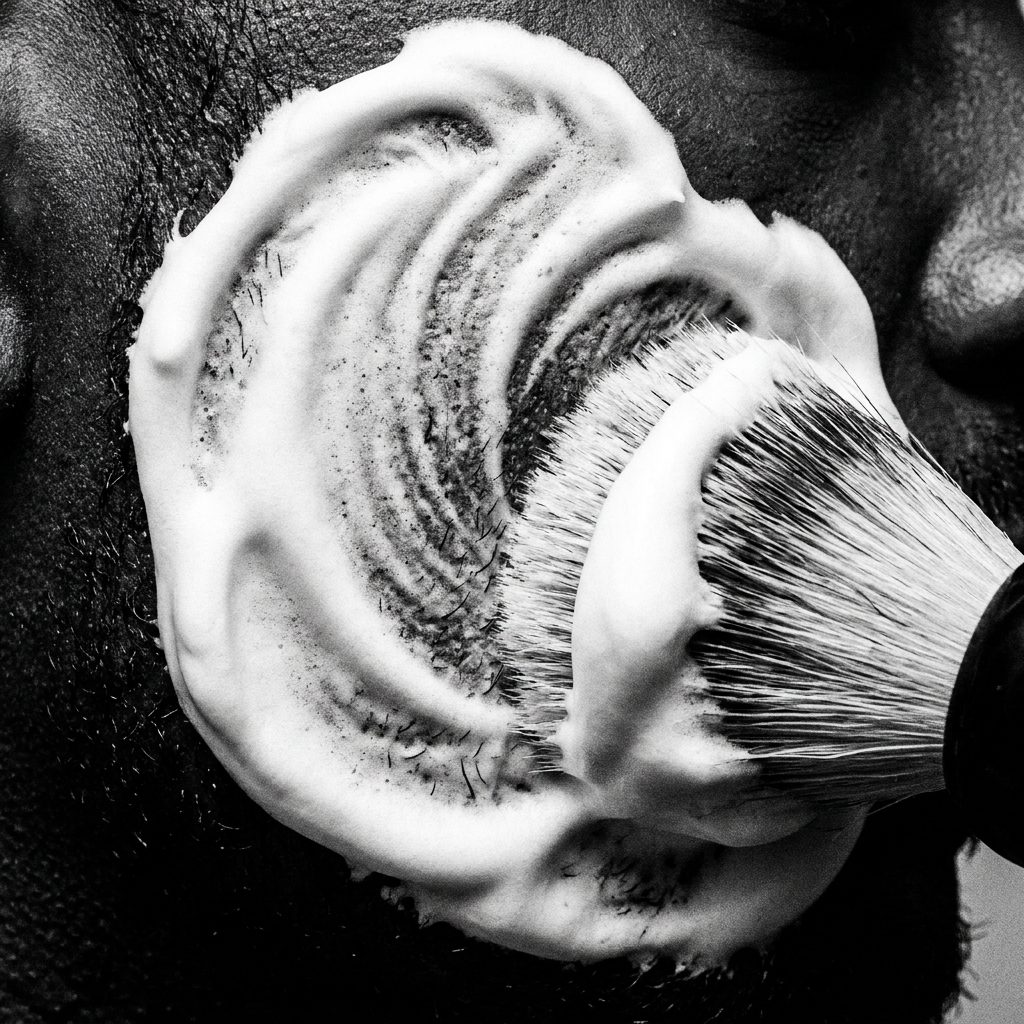
A shaving brush does three jobs a can of foam or a bare hand cannot: it exfoliates and lifts stubble away from the skin before the blade arrives, it works air into lather to increase its insulating, cushioning volume, and it drives water and product deep into the base of each hair shaft to soften it thoroughly before cutting. Which brush does that best depends entirely on bristle material — and the differences between badger, boar, and synthetic fiber are not marketing distinctions, they're measurable differences in water retention, backbone, and how quickly the brush breaks in. This guide covers the material science, then ranks five brushes worth owning.
Water Retention and Backbone — What Bristle Material Actually Determines
Water retention is how much lather-building liquid the bristle tips hold between loading the brush and applying it to the face — more retention means fewer trips back to the mug or bowl to reload, and a wetter, more voluminous lather on the face. Backbone (sometimes called "scritch") is the bristle's inherent stiffness and spring — a brush with more backbone provides a more noticeable exfoliating, massaging sensation against the skin and pushes lather into stubble more assertively, while a softer brush glides with less mechanical action but more comfort on sensitive skin.
These two properties trade off differently across the three material categories, which is why the "best" brush genuinely depends on skin sensitivity and lathering technique rather than one material being objectively superior.
Badger Hair — Grades and What They Actually Mean
Badger hair is graded by which part of the animal's coat it comes from, which determines fiber taper, softness, and water retention. Pure badger (the coarsest, most affordable grade) has decent water retention with firm backbone. Best badger is a step up in softness and taper. Super badger refines further, and silvertip badger — sourced from the finest, most tapered guard hairs, typically with a distinctive pale tip — is the softest and highest water-retention grade, commanding the highest prices accordingly. Badger in general holds more water than boar and requires less break-in time, which is why it remains the traditional benchmark material for wet shaving.
Boar Bristle — The Break-In Trade
Boar bristle starts significantly stiffer and coarser than badger, with lower initial water retention — new boar brushes are frequently described as "scratchy" for their first several weeks of use. What makes boar worth considering is what happens with repeated wetting and use: the bristle tips gradually split and soften (a process wet-shavers call "breaking in"), typically over 4 to 8 weeks of regular use, eventually approaching a softness and water retention that rivals mid-grade badger at a fraction of the cost. Boar is also a byproduct of pork production rather than a dedicated harvest, making it the more economical and, for some men, more ethically comfortable animal-derived option.
Synthetic Fiber — Consistency Without the Wait
Modern synthetic bristles (typically nylon or proprietary polymer blends) are manufactured to a target taper and softness rather than relying on natural variation, which means every brush of a given synthetic model performs identically out of the box — no break-in period required. Synthetic fiber also dries faster than animal hair (reducing bacterial growth risk between uses), doesn't shed the way natural hair occasionally does, and is the only option for men avoiding animal-derived products entirely. Historically synthetic fiber lagged behind badger on water retention; current-generation synthetics have closed most of that gap and are now a legitimate first choice rather than only a budget or ethical compromise.
#1 — Simpson Chubby 2 Best Badger — Best Splurge
The Chubby 2 is one of the most recognized names in premium wet shaving for good reason — a dense, generously-sized Best-grade badger knot with exceptional water retention and a substantial handle that most men find genuinely improves lather-loading technique simply by being easier to hold and load with confidence. It's an investment-tier purchase, but it is also a brush wet-shavers routinely report using for decades without performance decline.
#2 — Omega 10048 Boar Bristle Brush — Best Value
The Omega 10048 is a wet-shaving institution — an inexpensive, Italian-made boar brush that has introduced more men to traditional lathering than possibly any other single product. It requires the full boar break-in period discussed above, but once broken in it delivers genuinely capable performance for a fraction of any badger brush's price, and its firm early backbone is exactly what benefits men with coarse, dense stubble that needs real mechanical lifting.
#3 — Yaqi Synthetic Shaving Brush — Best Synthetic
Yaqi's synthetic knots have earned a strong reputation in the wet-shaving community for closely approximating badger-level softness and water retention straight out of the box, with none of boar's break-in wait and none of the animal-derived sourcing questions some men prefer to avoid. Fast-drying synthetic fiber is also the most hygienic option for humid bathrooms, since it resists the bacterial and mold growth that can develop in animal-hair brushes stored improperly.
#4 — Parker Pure Badger Shaving Brush — Best Mid-Range Badger
Parker's Pure Badger sits in an accessible middle ground — genuine badger hair water retention and softness noticeably above boar, at a price point far below Best or Silvertip grades. It's a sensible entry point for men who want to experience real badger performance before deciding whether a premium-grade upgrade is worth the significant price jump.
#5 — Edwin Jagger Best Badger Shaving Brush — Best Balanced Choice
Edwin Jagger's Best-grade badger brush balances softness, backbone, and water retention with a refined English design sensibility and a handle shape most men find comfortable to hold and load. It sits comfortably between the Parker's accessibility and the Simpson's premium positioning — genuinely excellent daily-use performance without the highest-tier silvertip price.
Comparison Table
| BRUSH | MATERIAL | BREAK-IN | PRICE |
|---|---|---|---|
| Simpson Chubby 2 | Best badger | None | ~$140 |
| Omega 10048 | Boar bristle | 4–8 weeks | ~$15 |
| Yaqi Synthetic | Synthetic fiber | None | ~$20 |
| Parker Pure Badger | Pure badger | Minimal | ~$25 |
| Edwin Jagger Best Badger | Best badger | None | ~$45 |
Loading and Caring for a Shaving Brush
- Soak natural-hair brushes before use. A 1–2 minute soak in warm water (unnecessary for synthetic, which doesn't absorb water into the fiber core) softens bristles and improves initial water retention for the shave.
- Load, don't just wet. Swirl the damp brush directly on shaving soap or work a small amount of cream into the bristles for 20–30 seconds before building lather — this is what actually gets product down to the base of the bristles, not just the tips.
- Rinse thoroughly and shake out excess water after every use. Store bristle-down or in a stand that allows airflow — trapped moisture at the base of the knot is the primary cause of mold and bacterial growth in natural-hair brushes.
- Never store a wet brush in a sealed container. This is the single most common mistake that shortens a natural-hair brush's usable life.
A brush is only as good as what it's loading — pair it with a quality shaving soap or see our full shaving kit guide for a complete wet-shaving setup. For blade and technique guides, visit the Blade Concept Shave Hub.