There is a moment, usually around week three of wet shaving, when the ritual clicks into place. The lather is right. The angle is muscle memory. The blade glides without drag. That moment does not arrive with a cartridge razor and a can of pressurized gel — it arrives when you have the correct set of instruments. A complete shaving kit removes the guesswork. It gives you a calibrated starting point: matched razor, brush, soap, and post-shave chemistry, chosen to work together from the first pass.
| 01 | 01Viking Revolution Safety Razor Shaving Kit (6-piece)Best overall beginner set | Shop → |
| 02 | 02Harry's Travel Shaving KitBest travel set | Shop → |
| 03 | 03Merkur Futur 700 Adjustable Safety RazorBest premium entry | Shop → |
| 04 | 04Edwin Jagger DE89 Lined Safety RazorBest first razor | Shop → |
| 05 | 05Proraso Shaving Kit, Refreshing (Vintage Gino Tin)Best budget entry | Shop → |
The economics make the case before the skin does. A double-edge blade costs roughly $0.10 to $0.30 each, and a single blade typically lasts five to seven shaves. That puts your per-shave cost below $0.05. A premium cartridge refill — Gillette Fusion, Braun Series — runs $3.00 to $4.50 per cartridge, with a usable lifespan of roughly the same number of shaves. Over a year of daily shaving, the difference compounds to several hundred dollars. A quality safety razor, maintained properly, will be in your bathroom cabinet for the next twenty years. The initial kit investment, even at the premium end of this list, pays back within eight to twelve weeks.
Beyond economics, the skin quality argument is physiological. Multi-blade cartridge systems use a lift-and-cut mechanism: the leading blade pulls each hair slightly above the skin line, subsequent blades sever it, and the hair retracts below the surface. For men with coarse or curly facial hair, this is the direct mechanical cause of ingrown hairs and razor bumps. A single double-edge blade, held at the correct angle, cuts cleanly at skin level without the hysteresis effect. The result, once technique is established, is a demonstrably smoother, less irritated face.
What a Complete Shaving Kit Should Include
A properly specified wet shaving kit contains five primary components and three optional ones. Understanding what each does allows you to evaluate any kit on the market with accuracy.
The five primary components:
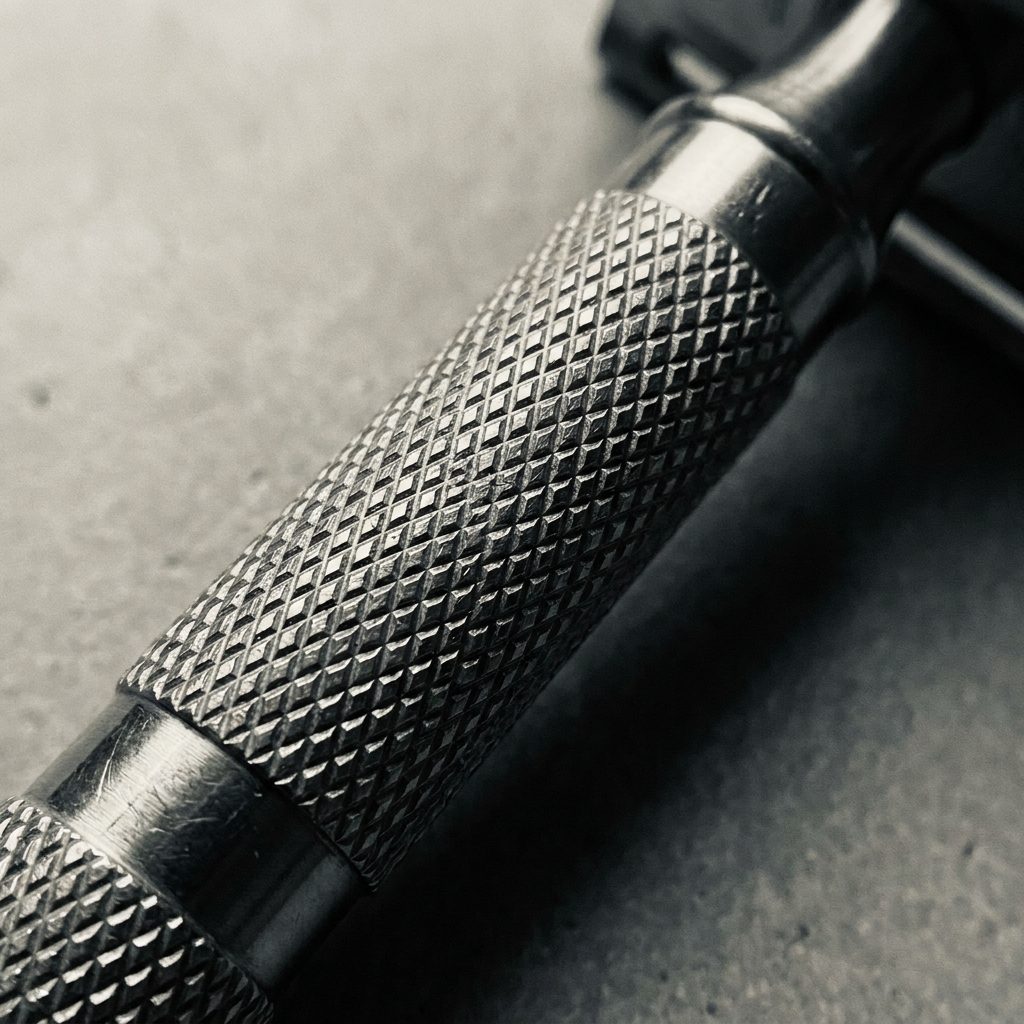
- Razor — The delivery mechanism for the blade. In safety razor kits, this is a double-edge (DE) razor with a fixed or adjustable blade gap. Quality is determined by the precision of the blade-clamping mechanism, handle weight and balance, and material (chrome-plated zinc alloy, brass, or stainless steel).
- Blades or cartridges — In DE kits, a sampler pack of 20–100 blades is ideal. Blade preference is personal: some shavers prefer the aggressive sharpness of Feather (Japanese), others the forgiving smoothness of Astra (Russian) or Derby (Turkish). A sampler lets you determine your blade before committing to a bulk buy.
- Shaving brush — The brush performs three mechanical functions: it exfoliates dead skin cells, lifts facial hair away from the skin, and works lather deep into the hair follicle. Brush hair type determines water retention, backbone, and face feel.
- Shaving soap or cream — The lubricant and cushion layer between blade and skin. Proper lather — built with soft water, the right soap-to-water ratio, and a loaded brush — produces a slick, cushioned surface that allows the blade to glide without friction.
- Aftershave or post-shave balm — The skin restoration step. Aftershave (alcohol-based) closes pores and provides antiseptic action; balm (alcohol-free) focuses on hydration and barrier repair. Sensitive skin typically responds better to a balm.
Optional but valuable additions:
- Pre-shave oil — Applied to damp skin before the brush, it increases surface lubricity and softens the beard. Most useful for coarse beards and dry skin types.
- Razor and brush stand — Allows the brush to dry bristle-down, which extends its lifespan by preventing water from pooling in the knot and degrading the glue. Keeps the razor off the countertop and reduces chrome wear.
- Blade bank — A sealed disposal container for used blades. A used DE blade is a biohazard item; it should never go directly into the household bin. Most blade banks hold 50–100 blades and seal permanently when full.
Safety Razor vs Cartridge Starter Kits — The Trade-Off
The single most important decision when buying a shaving kit in 2026 is razor type. Cartridge kits (such as Harry's travel kit below) offer zero learning curve: the pivot head compensates for technique errors, and the multi-blade design is forgiving. Safety razor kits require an investment in technique that takes two to three weeks to build.
The learning curve is specific: you need to hold the razor at approximately 30 degrees to the skin surface (rather than the 90-degree angle you might intuitively assume), apply zero pressure (let the razor's weight do the work), and work in short, controlled strokes with the grain of growth on the first pass. During this period, small nicks are common. By week three, most men report a noticeably cleaner shave with less irritation than they were getting from cartridges.
The long-term savings calculation is straightforward. Assume 300 shaves per year:
- Cartridge route: 300 shaves ÷ 6 shaves per cartridge = 50 cartridges × $3.50 average = $175/year in blades
- DE route: 300 shaves ÷ 6 shaves per blade = 50 blades × $0.15 average = $7.50/year in blades
The saving of roughly $167 per year means most safety razor kits — even at the $120 price point — break even within twelve months purely on blade cost. Over five years, the DE shaver is ahead by more than $800 in consumables alone.
For skin irritation reduction, the single-blade advantage is most pronounced in men with coarse, dark, or curly facial hair. If you have experienced persistent razor bumps on the neck with cartridge razors, switching to a well-loaded DE razor with proper technique is likely the most effective intervention available.
Shaving Brush Types Explained
The brush is the most technically varied component in any shaving kit. Brush quality affects lather quality, which directly affects shave quality. The three primary hair types are synthetic, boar, and badger — and within badger there are four commercial grades.
Synthetic is the best choice for beginners in 2026. Modern synthetic fibers (typically polyester or nylon microfibre) have reached a quality level where they are indistinguishable from mid-grade badger in lather production. Their advantages are significant: they break in immediately with no animal smell, dry faster than natural hair, have no ethical sourcing concerns, and are fully vegan. They work well with both cream and hard soap. The Edwin Jagger synthetic included in the DE89 set is a strong example of current synthetic quality.
Boar bristle brushes are stiffer and less expensive than badger. The backbone (stiffness under pressure) makes them effective at exfoliating and working soap from a hard puck. New boar brushes require a break-in period of fifteen to twenty uses before the tips soften. Good choice for men who prefer face lathering and are comfortable with a firmer, more scrubbing sensation.
Badger grades, from lowest to highest quality: Pure (most common, stiffer, less water-retentive), Best (mid-grade, good balance of softness and backbone), Super (transitional grade), and Silvertip (the premium tier). Silvertip badger hair comes from the neck of the badger, is the softest and most water-retentive grade, and produces the most luxurious lather bowl. A genuine silvertip brush represents the upper end of what you can expect in a production brush. Water retention in silvertip allows the brush to carry more warm water into the lather, producing a hot, dense foam that significantly improves shave quality. For a brush-by-brush breakdown across all three materials, see our dedicated guide to the best shaving brush for men.
The 2026 Rankings — Best Shaving Kits for Men
#1 — Viking Revolution Safety Razor Shaving Kit — Best Overall Beginner Set
Viking Revolution's six-piece kit is the most comprehensively specified beginner set on this list. It includes a safety razor with ten blades, a razor stand, a shaving brush, a lathering bowl, a shaving soap, pre-shave oil and an aftershave balm — every element a new wet shaver needs from day one, including the prep and aftercare steps most kits skip. Viking Revolution backs it with a satisfaction guarantee, which lowers the risk of trying wet shaving for the first time. At around $50, it competes favorably against a setup assembled piecemeal. (The Vikings Blade complete kit that held this spot is not currently listed on Amazon US; Vikings Blade now sells its razor with blades and a case on its own.)
#2 — Harry's Travel Shaving Kit — Best Travel Set
Harry's Travel Kit occupies a different category from the other entries on this list: it is a cartridge set built for the road rather than a wet-shaving starter. It includes a water-resistant toiletry bag, Harry's Truman razor handle with a five-blade cartridge, a travel-size foaming shave gel enriched with aloe, and a blade cover to protect the cartridge in your bag. The five-blade head spreads pressure to help protect against nicks, so there is no learning curve. At around $31, it makes the most sense as a gift, or as a travel setup for a man who shaves with a safety razor at home but doesn't want to fly with loose blades. (The Art of Shaving travel kit that held this spot is currently only offered on Amazon with a future availability date.)
#3 — Merkur Futur 700 Adjustable Safety Razor — Best Premium Entry
The Merkur Futur is one of the most intelligently designed adjustable safety razors in production. Twisting the handle adjusts the blade gap, which allows a single razor to serve the full spectrum from mild (low settings, ideal for new DE shavers or sensitive skin) to aggressive (high settings, for experienced technique and coarse beard growth). Blade changes are simple: press and lift the snap-on cap. The handle is solid brass with a matte chrome finish — heavier than aluminum or plastic razors, which reduces the temptation to apply pressure — and it takes any standard double-edge blade. It is made in Germany. The Dovo silvertip brush set that used to accompany it is not currently listed on Amazon US, so this is the razor on its own at around $75; pair it with a quality synthetic brush. The learning curve is real: begin at a low setting and increase incrementally.
#4 — Edwin Jagger DE89 Safety Razor — Best First Razor
Edwin Jagger's DE89 has been a benchmark safety razor for over a decade for sound engineering reasons: the straight-guard head delivers a mild, consistent shave that is very hard to nick yourself with, and the three-piece chrome-plated razor has the right weight, length and balance for a beginner. The lined version linked here adds a finely engraved handle. It is the razor most commonly recommended to beginners by wet shaving communities precisely because its mild blade exposure forgives technique errors while still delivering a significantly better shave than a cartridge system. The full DE89 set with brush and bowl isn't currently listed on Amazon US, so this is the razor on its own at around $38 — add a synthetic brush and a soap from our shaving soap guide and you have a complete, British-made kit for well under $80.
#5 — Proraso Shaving Kit, Vintage Gino Tin — Best Budget Entry
Proraso has been manufacturing shaving chemistry in Florence since 1948, and its formulations remain among the most effective available at any price. This kit contains three full-size Proraso classics in the green Refreshing and Toning formula: pre-shave cream, shaving cream in a tube, and after shave balm, all with eucalyptus oil to purify and help reduce post-shave irritation and menthol to refresh and tone. The formulas are over 95% natural and free of silicones, mineral oils, SLS and parabens, and they come in a collectible tin printed with Proraso's 1950s advertising. At around $27, this is the entry point for anyone who wants to experience quality wet shaving chemistry without committing to hardware. Pair with any safety razor — or even use with a cartridge razor — and the difference in shave quality versus mass-market foam from a can is immediately apparent.
2026 Kit Comparison — At a Glance
| Product | Includes | Skill Level | Best For | Price |
|---|---|---|---|---|
| Viking Revolution 6-Piece Kit | Razor, 10 blades, stand, brush, bowl, soap, pre-shave oil, balm | Beginner | First-time DE shaver, complete setup | ~$50 |
| Harry's Travel Kit | Cartridge razor, shave gel, toiletry bag, blade cover | Any | Travel, cartridge shavers | ~$31 |
| Merkur Futur 700 | Adjustable razor (add your own brush) | Intermediate–Advanced | Experienced shaver, premium hardware | ~$75 |
| Edwin Jagger DE89 | Razor (add your own brush) | Beginner–Intermediate | Best all-round first razor | ~$38 |
| Proraso Shaving Kit (Gino Tin) | Pre-shave, shaving cream, aftershave balm | Beginner | Budget entry, chemistry-first approach | ~$27 |
Building Your Own Kit — The Modular Approach
Pre-assembled kits are optimized for convenience and giftability. If you are building a kit for yourself and are willing to spend thirty minutes on research, the modular approach — selecting each component individually — typically delivers better overall quality at the same price, because kit manufacturers sometimes cut costs on one component to hit a retail price point.
A well-specified modular starter kit for approximately $80–90:
- Razor: Merkur 34C HD (Heavy Duty) — a closed-comb, three-piece razor with a short handle and exceptional build quality. Considered by many experienced wet shavers to be the safest DE razor to learn on. Available for approximately $40–45.
- Brush: Edwin Jagger Synthetic — available separately for approximately $20–25. Immediately usable, easy to care for, produces reliable lather.
- Soap or cream: Proraso Green Shaving Cream (tube or tub) — approximately $10–12. One of the highest-performing creams available under $15. Alternatively, Mitchell's Wool Fat Shaving Soap for approximately $15 if you prefer a traditional hard soap puck.
- Post-shave: Proraso Green Aftershave Balm — approximately $12. The alcohol-free formulation is recommended for the learning phase, when skin may be more reactive.
- Blades: A sampler pack — Feather, Astra, Derby, Gillette Silver Blue, Personna — to determine your preferred blade before buying in bulk. Approximately $15 for a 50-blade mixed sampler.
Total: approximately $97–107, with the advantage of having deliberately selected each component. As you develop preference — a desire for a heavier razor, or a silvertip brush, or a specific soap format — you can upgrade individual components without replacing the whole kit.
For a deeper evaluation of individual razors — head geometry analysis, blade gap measurements, and handle ergonomics compared across twenty instruments — see our Best Safety Razors 2026 guide. For the chemistry side — soap hardness, glycerin content, and lather science — visit the Shave section for our full wet shaving reference library. For gel and foam alternatives, see our Best Shaving Gel for Men 2026 comparison.