Men skip SPF more than any other skincare step. Ask why and the reasons are consistent: too greasy, white cast, not relevant when it's overcast. All three objections are solvable with the right formulation choice — and 2026 gives us better options than any previous year, particularly in the category of invisible mineral filters and hybrid formulations that eliminate the texture trade-off that drove men away from the category in the first place. But before addressing the product choices, there is a more foundational point worth establishing: men who shave daily are measurably more UV-vulnerable than men who do not.
This is not marketing language. It is a direct consequence of what shaving does to the skin's structural defense architecture. Understanding that mechanism changes how you think about SPF — from optional vanity to obligatory maintenance.
The Science — Why Shaving Increases UV Vulnerability
The stratum corneum is the outermost layer of the epidermis — a brick-and-mortar structure of dead corneocytes bound by lipid bilayers. It serves multiple barrier functions simultaneously: blocking microbial invasion, preventing transepidermal water loss, and absorbing and scattering ultraviolet radiation before it reaches the living cells of the viable epidermis below. The UV-absorbing function is performed primarily by melanin-filled keratinocytes within the stratum corneum and, in more deeply pigmented skin types, by the melanin granule supranuclear caps that protect keratinocyte nuclei from UV-induced DNA damage.
Shaving mechanically removes the outermost 2–4 cell layers of the stratum corneum from the shaved area. This occurs every single day in daily shavers. The consequence is a persistently thinner UV-absorbing barrier on the face compared to unshaved skin or female skin. The effect is not catastrophic — the stratum corneum recovers — but it is real and measurable in transepidermal water loss studies that use shaving as a controlled barrier disruption method. Researchers use shaving specifically because it reproducibly reduces stratum corneum thickness without breaking the skin surface. That is the same reduction you are living with every morning.
UVA radiation (320–400nm) penetrates deeply into the dermis where it attacks the extracellular matrix. It generates reactive oxygen species (free radicals) that break down collagen and elastin fibres — the structural proteins responsible for skin firmness and elasticity. This is photoageing: the premature wrinkling, sagging and discolouration associated with chronic sun exposure independent of visible sunburn. UVA intensity is relatively constant throughout the day and year. It penetrates cloud cover and glass. It is present whenever daylight is present. UVB radiation (280–320nm) is shorter-wavelength and higher-energy. It causes visible burning, but its more significant action is direct DNA damage to keratinocyte nuclei — forming cyclobutane pyrimidine dimers that are the primary initiating event in skin cancer development.
Broad-spectrum SPF50 blocks both. Applying it after every shave is not aesthetic vanity. It is protective maintenance for a mechanically compromised skin barrier.
Chemical vs Mineral Filters — The Full Picture
Chemical UV filters work by absorbing photon energy and releasing it as heat via a photochemical reaction. The major approved chemical filters include avobenzone (UVA), octinoxate, homosalate and octisalate (all primarily UVB-range). They are molecularly invisible on skin, require no white cast, and have excellent cosmetic elegance. The main caveat: they need approximately 20 minutes post-application to be fully photo-reactive. Applying and immediately stepping into sun reduces their effective protection. The oxybenzone concern — raised by studies suggesting potential endocrine disruption — remains unresolved; the concentrations found in vivo from topical application are orders of magnitude below known endocrine-active thresholds, but the precautionary argument for oxybenzone-free formulations is defensible.
Mineral filters — zinc oxide and titanium dioxide — work physically, reflecting and scattering incoming UV radiation. They provide broad-spectrum coverage, including the long-wave UVA1 (340–400nm) range that some chemical filters handle poorly. Traditional formulations leave a visible white cast on medium and deeper skin tones due to the particle size of the mineral pigments. Micronized and nano-sized zinc oxide formulations have dramatically reduced this problem in modern products. Some dermatologists retain a preference for mineral-only SPF in sensitized skin conditions (rosacea, post-procedure) precisely because there is no photochemical activation — protection is immediate and purely physical.
Hybrid formulations combine low-concentration zinc oxide for broad UVA coverage with chemical filters for cosmetic elegance and UVB performance. These are the practical choice for most men — they solve both the texture problem and the coverage gap.
Best SPF Products for Men 2026
1. La Roche-Posay Anthelios UVMune 400 SPF50+ — Best Overall
The Anthelios line has occupied the top tier of independent SPF testing for over a decade. The UVMune 400 formulation uses Mexoryl 400 as its primary UVA filter — a proprietary L'Oréal-developed compound that extends UVA coverage to 400nm, addressing the long-wave UVA1 gap that most other filters leave. In independent EU SPF testing by consumer organisations, Anthelios consistently delivers actual protection values at or above label claims — a standard the industry routinely fails. The Ultra-Fluid texture is genuinely invisible on all skin tones. Fragrance-free, non-comedogenic. This is the daily driver recommendation for men who want one product that covers everything without compromise.
2. EltaMD UV Clear SPF46 — Best for Acne-Prone / Post-Shave
EltaMD UV Clear is dermatologist-prescribed as the standard post-procedure SPF for good reason. Its formulation pairs 9% zinc oxide (broad UVA coverage, no photochemical activation delay) with 4% niacinamide — a B3 derivative that regulates sebum production, reduces post-inflammatory hyperpigmentation and calms inflammatory redness. For men who shave and also contend with breakouts, razor burn or general post-shave redness, the niacinamide makes this uniquely appropriate. Oil-free, fragrance-free. The zinc oxide concentration keeps the finish matte without full mineral opacity. If you are only going to use one SPF product in the post-shave window, this is the strongest candidate.
3. Neutrogena Ultra Sheer Dry-Touch SPF50+ — Best Budget
At $15 for a full-size tube, Neutrogena Ultra Sheer removes the cost objection to daily SPF use entirely. Helioplex technology stabilizes avobenzone — addressing the photodegradation problem that makes unstabilized avobenzone formulations less reliable over time. The dry-touch finish is genuinely non-greasy — one of the first chemical SPFs to achieve a texture that normal and oily skin types could wear without the slick, reflective look that defines the category in its worst iterations. For daily commuters, office workers and any man applying SPF primarily for incidental sun exposure, this is the clear value choice. The oxybenzone content gives those with sensitivity a reason to look at EltaMD or La Roche-Posay instead, but for the majority of men this is a completely appropriate daily option.
4. Supergoop Unseen Sunscreen SPF40 — Best Cosmetic Elegance
Supergoop Unseen has become the product that converts men who have rejected every other SPF on texture grounds. The gel-to-serum texture disappears into skin on contact, leaving no film, no cast, no greasiness and no perceptible residue on all skin tones — including deeper tones where mineral white cast is most pronounced. It contains red algae (antioxidant) and meadowfoam seed oil (emollient) but behaves on skin like water. The SPF40 rating is lower than the other options in this list, and its UV coverage is primarily chemical-filter driven. It is not the best option for extended outdoor exposure. But for the substantial category of men who have psychologically checked out of SPF due to years of miserable texture experiences, the Unseen converts them — and imperfect SPF adherence outperforms perfect non-use.
5. Cetaphil Sun SPF50 Light Gel — Best for Sensitive Skin
Cetaphil's Sun SPF50 uses Tinosorb S and Tinosorb M — next-generation photostable chemical filters that are EU-approved and widely used globally. These are not yet FDA-cleared (the US regulatory approval process for new sunscreen filters has been slow), but they are available in formulations sold internationally and in American markets through import channels. Tinosorb M in particular behaves as a hybrid organic-inorganic filter — it scatters and absorbs UV — providing broad-spectrum coverage with excellent photostability. Cetaphil's sensitivity credentials are robust: the brand is regularly recommended by dermatologists for rosacea-prone, post-procedure and eczema-affected skin. Fragrance-free, alcohol-free. For men with sensitized skin post-shave, this is the cleanest formulation in the list.
How Much SPF and How Often
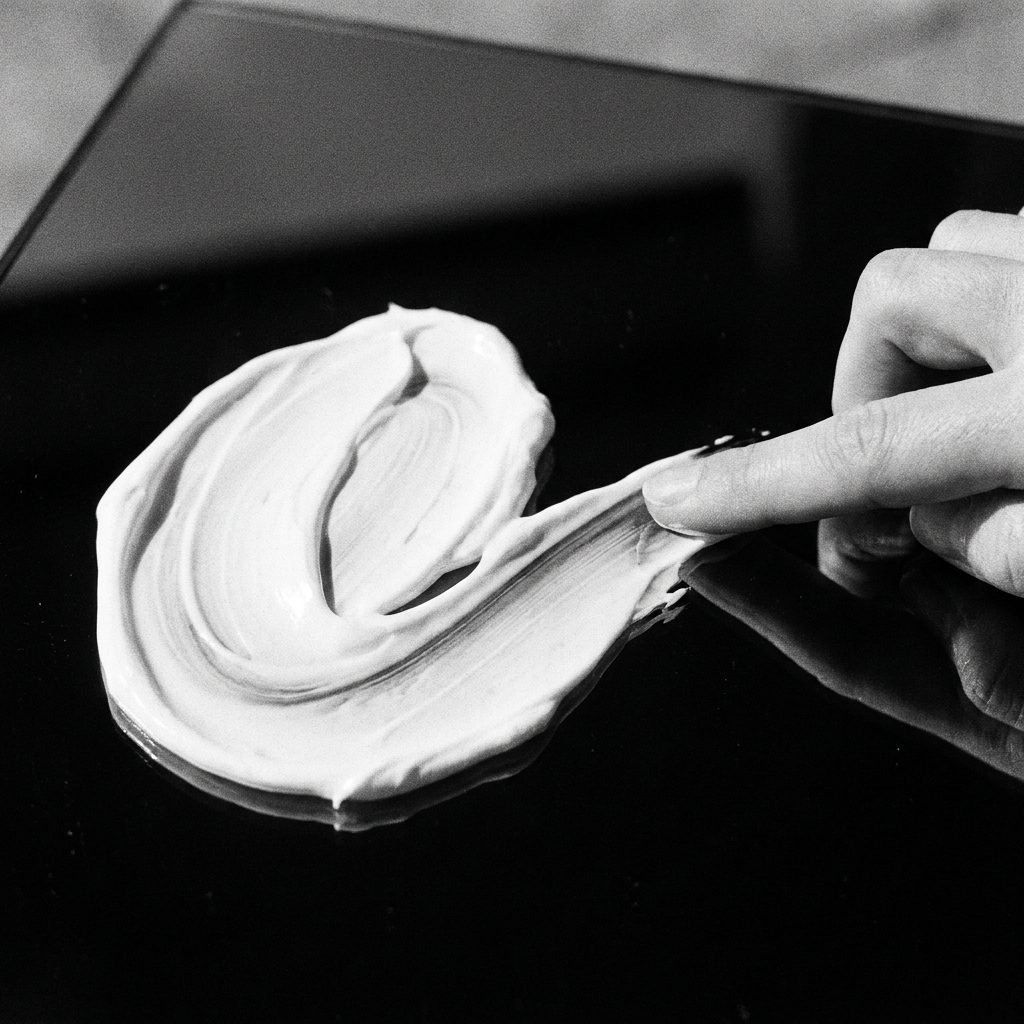
The SPF system was calibrated assuming a dose of 2mg per square centimetre of skin. For the average male face and neck, that translates to approximately one-quarter teaspoon — 1.25ml. In practice, the majority of men apply substantially less. Consumer studies consistently show that real-world application amounts are 25–50% of the recommended dose. The consequence is significant: SPF50 applied at 25% of the recommended quantity delivers approximately SPF8 protection. The relationship between application density and protection is nonlinear — the SPF system is not proportional, it is exponential. Thin application does not deliver proportionally reduced protection. It collapses it.
The practical instruction: when you pick up the product, the amount in your palm should look like an uncomfortably large quantity for your face. That is the right amount. Apply in sections — forehead, both cheeks, nose, chin, neck — rather than attempting to spread a single dot from the center outward. This distributes film formation more uniformly.
Reapplication matters in high UV conditions. For office work and incidental exposure, a morning application is sufficient. For outdoor activities, sports or beach environments, reapply every 2 hours and immediately after swimming or heavy sweating. No SPF product is water-proof — the FDA requires the term "water resistant" with a declared time period (40 or 80 minutes) rather than the previously permitted "waterproof" claim.
SPF in Moisturizer vs Dedicated SPF Product
The allure of a 2-in-1 SPF moisturizer is obvious — one step instead of two. The practical problem is film formation. SPF testing occurs with the SPF product applied as a standalone film at 2mg/cm². When the same SPF-labelled compound is incorporated into a moisturizer at lower concentration and combined with emollient vehicles, the film formed on skin is different from the test condition. Independent consumer testing organisations in Germany, UK and France have repeatedly found that SPF moisturizers deliver between 30–60% of their labelled SPF in real-world conditions, compared to 85–95% for dedicated SPF products.
For daily office use and incidental sun exposure in moderate UV index conditions, a good SPF moisturizer is pragmatically adequate. For direct outdoor exposure, sport, or if you live in a high UV index climate, apply a dedicated SPF product over your moisturizer. The two-step protocol takes fifteen additional seconds. The protection uplift is substantial.
"SPF isn't optional for men who shave daily. It's barrier maintenance."
The skin on a man's face is among the most regularly damaged skin on the human body — shaved daily, intermittently sunburned, and routinely exposed without protection. The products in this guide eliminate every historical excuse for avoidance. Choose one, apply enough of it, and apply it consistently. The compounding benefit over a decade of daily use is genuinely material — both in skin cancer risk reduction and in the preservation of the dermal collagen that determines how your face ages.
If the goal behind sun exposure is simply color rather than UV itself, that outcome is achievable without any of the risk above — see our guide to the best self-tanner for men, which produces a genuine tan with zero UV exposure and no compromise to the SPF routine described here.
Lips carry the same UV vulnerability as facial skin but with no sebaceous glands and minimal melanin defense of their own — a separate SPF product is worth the ten extra seconds. See our guide to the best lip balm for men for the specific chemistry involved.
For the broader skincare context, see our skin category and the companion article Men's Skincare Routine — The Science.