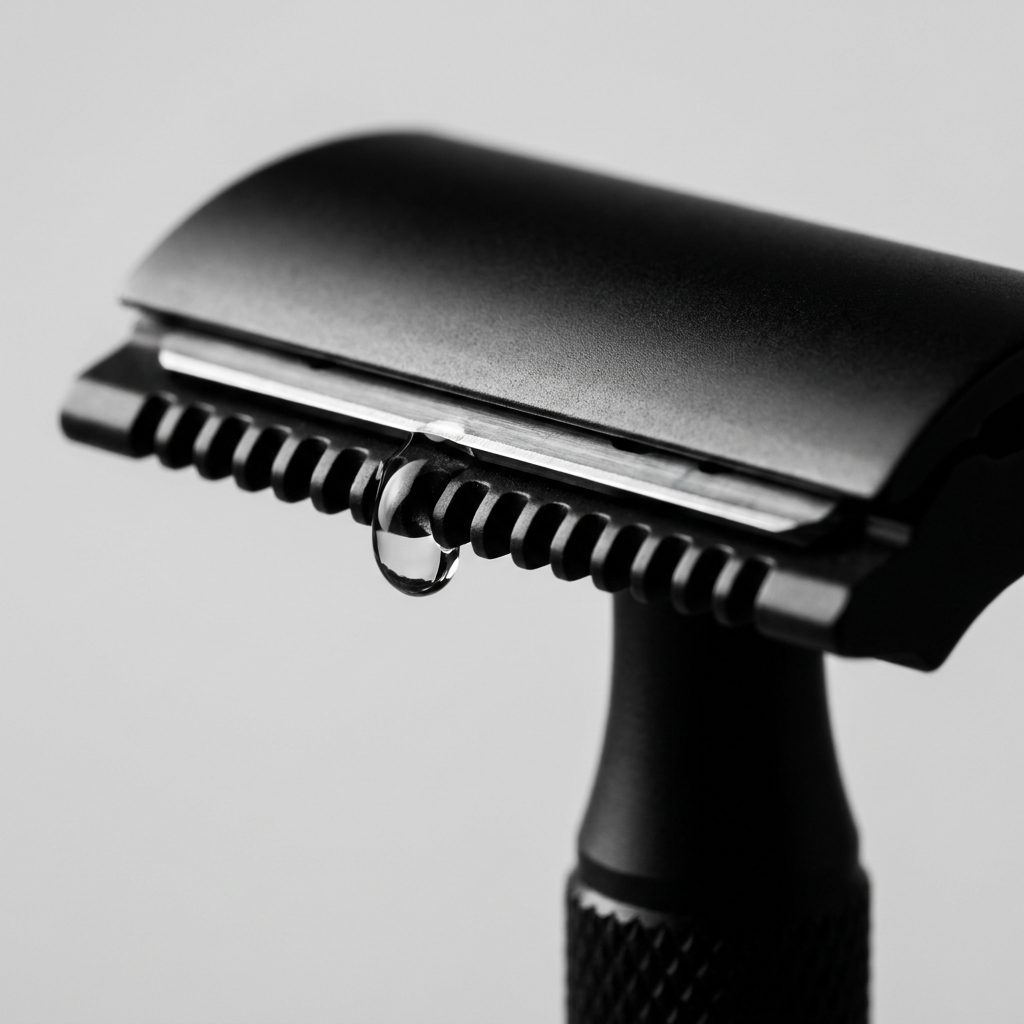
An ingrown hair is not random bad luck — it's a predictable mechanical outcome of hair curvature, follicle angle, and shaving technique. Clinically termed pseudofolliculitis barbae when chronic, the condition disproportionately affects men with coarse, curly, or tightly-coiled facial and body hair, and it is almost entirely preventable once you understand the mechanism. This guide covers the follicle biology, the shaving and grooming variables that determine risk, and the products with genuine evidence behind them.
Why Curly Hair Causes Ingrown Hairs and Straight Hair Rarely Does
Every hair grows out of a follicle at an angle relative to the skin surface — rarely perfectly perpendicular. In men with straight hair, the shaft exits the skin and continues growing outward in roughly the same trajectory, with minimal curvature. In men with curly or tightly-coiled hair, the follicle itself is curved beneath the skin, which means the hair shaft grows in a spiral or C-shaped path even before it reaches the surface.
When that curved hair is cut short — by a razor, clipper, or tweezers — the freshly sharpened tip retains the curvature of the follicle. As it continues to grow, the curved tip can re-enter the skin directly (transfollicular penetration, curving back into its own follicle wall) or, more commonly, the tip can pierce through the follicle wall into the surrounding dermis before ever reaching the surface, or curl back and re-penetrate skin adjacent to the original follicle after emerging (extrafollicular penetration). Either mechanism triggers a foreign-body inflammatory response — the immune system reacts to what is functionally a hair-shaped splinter, producing the characteristic red, raised, sometimes pus-filled bump.
This is why the same razor and technique that works fine for one man produces chronic irritation in another — the risk is determined largely by hair curvature genetics, not technique alone. That said, technique is the single largest controllable variable.
The Shaving Variables That Determine Risk
Cutting too close is the single biggest preventable cause. A hair cut flush with or below the skin surface has a much shorter distance to travel before its curved tip can re-penetrate the follicle wall. This is precisely why multi-blade cartridge razors — engineered via the hysteresis lift-and-cut mechanism to cut below the skin plane — carry meaningfully higher ingrown hair risk for curly-haired men than single-blade razors or electric shavers set to leave slight stubble.
Shaving against the grain compounds the problem by lifting the hair further before cutting, producing an even shorter, sharper stub angled back toward the skin. For men prone to ingrown hairs, shaving strictly with the grain — even at the cost of a slightly less close result — meaningfully reduces incidence. Our full safety razor technique guide covers grain-mapping in detail.
Dull blades require repeated passes and more pressure to cut cleanly, both of which increase follicle trauma and inflammation independent of hair curvature. A fresh blade that cuts in a single controlled pass is safer for ingrown-prone skin than a dull one used more aggressively.
Exfoliation — The Preventive Layer Most Men Skip
Regular exfoliation removes the buildup of dead skin cells that can physically block a follicle opening, forcing a regrowing hair to divert sideways into the surrounding tissue instead of exiting cleanly. Two categories of exfoliant address this: mechanical exfoliants (a washcloth, dry brush, or scrub used before shaving physically dislodges surface debris and slightly lifts hairs for a cleaner cut) and chemical exfoliants (glycolic and salicylic acid dissolve the keratin "glue" holding dead cells together, keeping follicle openings clear over the following 24–48 hours). Salicylic acid in particular is oil-soluble, which lets it penetrate into the follicle itself rather than working only on the surface — a meaningful advantage for follicle-level prevention. For the full ingredient breakdown, see our guide to salicylic acid for men.
#1 — Tend Skin Solution — Best Overall Treatment
Tend Skin's active ingredient is a diluted astringent solution built around resorcinol and hydroxide compounds that reduce the redness and inflammation of existing bumps while gently exfoliating dead skin around the follicle opening, freeing trapped hairs. It has been a barbershop and dermatology-adjacent staple for decades specifically because it addresses both the inflammatory response and the mechanical blockage simultaneously.
#2 — PFB Vanish Chromabright — Best for Dark Spots and Bumps
PFB Vanish targets a specific complication of chronic ingrown hairs: post-inflammatory hyperpigmentation, the dark spots left behind after repeated bump-and-heal cycles. The formula combines glycolic acid for follicle-level exfoliation with brightening actives that address the pigmentation directly, making it the strongest option for men managing both active bumps and the discoloration from past ones — common on the neck and jawline in men who shave daily.
#3 — Fur Ingrown Concentrate — Best Daily Prevention
Designed for use immediately after shaving or waxing, Fur's concentrate combines salicylic and lactic acids with witch hazel to exfoliate the follicle opening while calming inflammation from fresh razor trauma. Its lightweight, fast-absorbing formula makes it practical as a genuine daily-use product rather than a spot treatment, which matters because consistent daily exfoliation — not occasional intervention — is what actually keeps follicle openings clear over time.
#4 — Bump Patrol Aftershave Treatment — Best Post-Shave Ritual
Formulated specifically as an aftershave replacement rather than an add-on step, Bump Patrol combines glycolic acid with soothing botanicals (tea tree, aloe) in a fast-absorbing gel. Because it doubles as the aftershave step rather than requiring an additional product, it's the easiest option to build into an existing routine without adding time — a meaningful compliance advantage, since consistency matters more than potency for ingrown prevention.
#5 — Stridex Maximum Strength Pads — Best Budget Chemical Exfoliant
At 2% salicylic acid in a pre-soaked pad format, Stridex is the simplest way to build follicle-level exfoliation into a routine — swipe over shave-prone areas (neck, jawline, or body-shave zones) a few times a week. It lacks the soothing botanicals of the dedicated ingrown-hair brands above, but the active concentration is comparable, and the price makes it an easy entry point for men testing whether chemical exfoliation solves their specific case before investing in a specialized product.
Comparison Table
| PRODUCT | KEY ACTIVE | BEST FOR | PRICE |
|---|---|---|---|
| Tend Skin Solution | Resorcinol astringent | Overall treatment | ~$20 |
| PFB Vanish Chromabright | Glycolic acid + brighteners | Dark spots and bumps | ~$28 |
| Fur Ingrown Concentrate | Salicylic + lactic acid | Daily prevention | ~$38 |
| Bump Patrol Aftershave | Glycolic acid + botanicals | Post-shave ritual | ~$10 |
| Stridex Max Strength Pads | 2% salicylic acid | Budget chemical exfoliation | ~$9 |
When to See a Dermatologist
- Persistent, painful, or spreading bumps that don't improve after 2–3 weeks of consistent exfoliation and grain-correct shaving may indicate secondary bacterial infection, which can require topical or oral antibiotics.
- Keloid scarring — thick, raised scar tissue forming over repeated ingrown sites, more common in men with naturally higher keloid predisposition — should be evaluated before it spreads further, since prevention is far easier than treating established keloids.
- Chronic pseudofolliculitis barbae that doesn't respond to technique changes and topical treatment is a reasonable candidate for laser hair reduction, which decreases hair density in affected areas and, for many men, resolves the problem at its root by simply reducing the number of hairs that can become ingrown.
Ingrown hair prevention starts with the razor itself. If cartridge razors are consistently a problem, switching to a single-blade safety razor or an electric shaver that leaves slightly more stubble length is often the single highest-leverage change. Once a bump has healed, it often leaves a dark mark behind — our guide to tranexamic acid covers the ingredient with the strongest evidence for fading that specific kind of post-inflammatory mark, while centella asiatica addresses the active redness and irritation while a bump is still healing. For the complete shaving reference — technique, blade selection, and post-shave care — visit the Blade Concept Shave Hub.