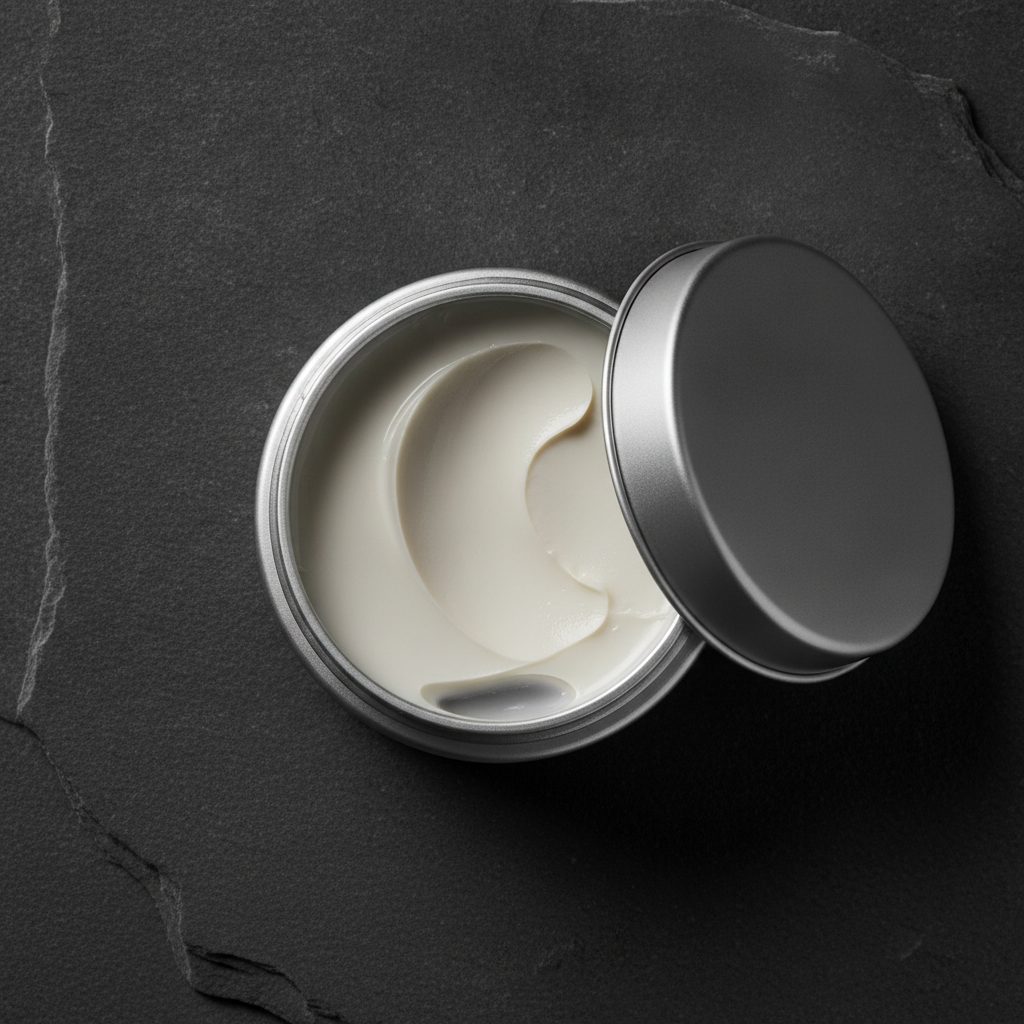
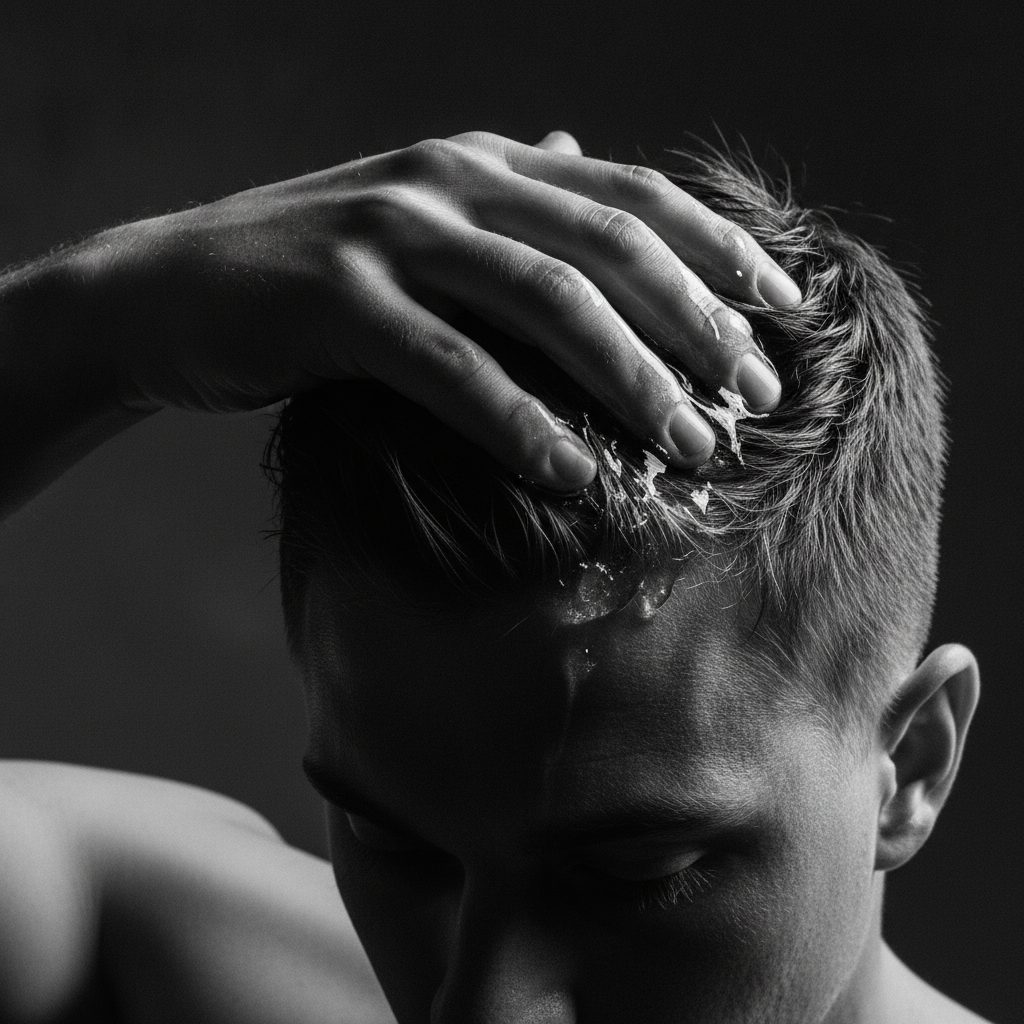
Hair wax delivers pliable medium hold that can be reshaped throughout the day without brittleness. Where gel locks in place and pomade shines, wax gives a lived-in, textured finish. It works on damp or dry hair and won't crack, flake, or leave a helmet-hard cast. The right tool for modern disconnected cuts, textured crops, and messy natural styles where movement matters as much as hold.
We may earn a commission from links on this page.
Top Pick 2026
Reuzel Pink Heavy Hold Grease
The best reworkable option for classic shine styles. An oil-based beeswax grease with heavy hold and a healthy shine that stays pliable all day — it needs shampoo to wash out, but it holds thick and curly hair that lighter waxes can't. For a matte, water-based alternative, see Layrite Natural Matte Cream at #2.
01 — Rankings
5 Best Hair Waxes for Men, Ranked
Scored on Hold, Reworkability, Finish, Wash-Out, and Value. Each product assessed on formulation and documented owner reports across short, medium, and thick hair types. Scores out of 10 are editorial judgments from specifications and owner reports, not lab tests.
01 — Best for Shine & Classic Styles
Reuzel Pink Heavy Hold Grease (Oil-Based)
$20 / 3.4oz
Editor's Choice
Reuzel Pink is an oil-based grease built on beeswax, with a healthy high shine and heavy hold. It glides through the hair without clumping and stays pliable rather than setting hard — no crunch, no flake, and a comb run through it mid-afternoon still reshapes the style. The trade-off of an oil base is wash-out: it does not rinse out with water alone, so plan on shampoo (the dry-shampoo technique in the FAQ below works best).
Popular in barbershops globally — the pink jar is a familiar sight on back-bar shelving. Reuzel says it holds even the thickest and curliest hair and tames cowlicks and unruly growth patterns, and the scent is a traditional pomade fragrance with a twist. Best suited to pompadours, quiffs, slick-backs and side-parts where shine is part of the aesthetic rather than something to avoid. On Amazon it is currently sold by a third-party seller, SolRetail, at around $20.
Work a small amount between your palms until it softens, then work through hair from roots to ends and comb into shape. Start small: an oil-based grease is easy to overdo and slow to wash out.
Check Price on Amazon →
02 — Best Matte Finish
Layrite Natural Matte Cream
$25 / 4.25oz
The gold standard for a natural, matte finish wax. Lightweight but effective — Layrite Natural Matte Cream works best on short to medium lengths where it adds texture without weight. The cream base distributes easily even through dry hair, which is uncommon in this product category. Most waxes and clays resist working through dry hair; the Layrite cream formula has just enough slip that you don't need damp hair to distribute it evenly.
Zero shine, zero crunch. The finish is genuinely matte — not the semi-matte that many products claim. Best for men who want an effortlessly natural, "just ran my fingers through it" look. The 4.25oz jar puts it in the correct size bracket: enough product to evaluate whether it works for your hair type without committing to a container that takes a year to finish.
Not recommended for thick, coarse, or very long hair that needs significant hold. The medium hold is genuinely medium — it won't fight gravity on heavy hair. For that use case, step up to the Layrite Superhold or consider the Baxter of California Clay Pomade below.
Check Price on Amazon →
03 — Best Value
Bed Head for Men Matte Separation Workable Wax (2-Pack)
$25 / 2 × 3oz
Strong matte separation wax — the best choice for textured, piece-y styles where individual strand definition matters. The slightly tacky texture on application makes it ideal for creating separated, spiky looks on short hair. Full matte finish with enough hold to keep separated sections where you put them. Not a product for blended, flowing styles — TIGI Bed Head Matte Separation is for when you want to see the individual strands working.
Price-to-performance is still the best in this roundup per ounce: the Amazon listing is a two-pack of 3oz tins for around $25, sold by a third-party seller, Witz (the single tin was only available in limited stock from a third party when we checked). Bed Head rates the hold at 5 out of 5 and says it stands up to humidity. A little goes a long way with this formula — use less than you think you need, especially on fine hair. Over-application with any wax leads to build-up and weight; with TIGI Bed Head it will leave hair looking greasy rather than textured.
Best used on short to medium hair — textured crops, French crops, short quiffs, and buzzed sides with longer tops. Wash-out requires shampoo; it doesn't rinse clean with water alone.
Check Price on Amazon →
04 — Best Premium
Baxter of California Clay Pomade
$20 / 2oz
Premium clay-wax hybrid. Clay adds a genuine matte finish while the wax base gives hold and pliability that pure clay products lack. The combination results in a higher-hold product than Layrite Natural while retaining the matte surface that makes it appropriate for modern barbershop finishes. Higher hold than Layrite Natural — suitable for medium-length hair that needs structure without the stiffness of a gel or the shine of a traditional pomade.
Baxter describes it simply: it separates, defines and molds, with a strong, long-lasting hold and a matte finish. That makes it a strong choice for scissor-cut finishes on thick hair, where lighter products fail to hold without looking overdone.
At around $20 for 2oz, it is one of the more expensive products per ounce in this roundup — only Sumotech costs more. It's the correct choice if you want the best possible matte finish with real hold, and you're willing to pay for it. Wash-out requires shampoo and may need a second pass on thick hair — the clay component doesn't release easily with water alone.
Check Price on Amazon →
05 — Best for Short-to-Medium Hair
Bumble and bumble Sumotech
$31 / 1.5oz
Bumble's styling solid is a polymer-based cream solid with a low-shine finish and flexible hold — landing between the full-matte of Layrite Natural and the shine of Reuzel Pink. Best for men with short to medium-length hair who want a product that bridges the gap between a polished and textured look. Not quite pomade, not quite wax, and that's exactly the point.
A very small amount is needed per application — the 1.5oz jar is deceptively lasting. Most men use far too much on the first application; start with a pea-sized amount, work it through your palms until it melts, and only add more if you genuinely need it. The solid format is unusual in the men's styling category — it warms to a workable consistency with body heat, which means no sticky fingers before you've even touched your hair.
The value score of 5/10 reflects the price-per-ounce, which is significantly higher than any other product in this roundup. That said, the longevity from a small jar genuinely offsets some of that cost in practice. If price is a primary concern, Reuzel Pink delivers similar reworkability at less than half the cost per ounce.
Check Price on Amazon →
02 — Chemistry
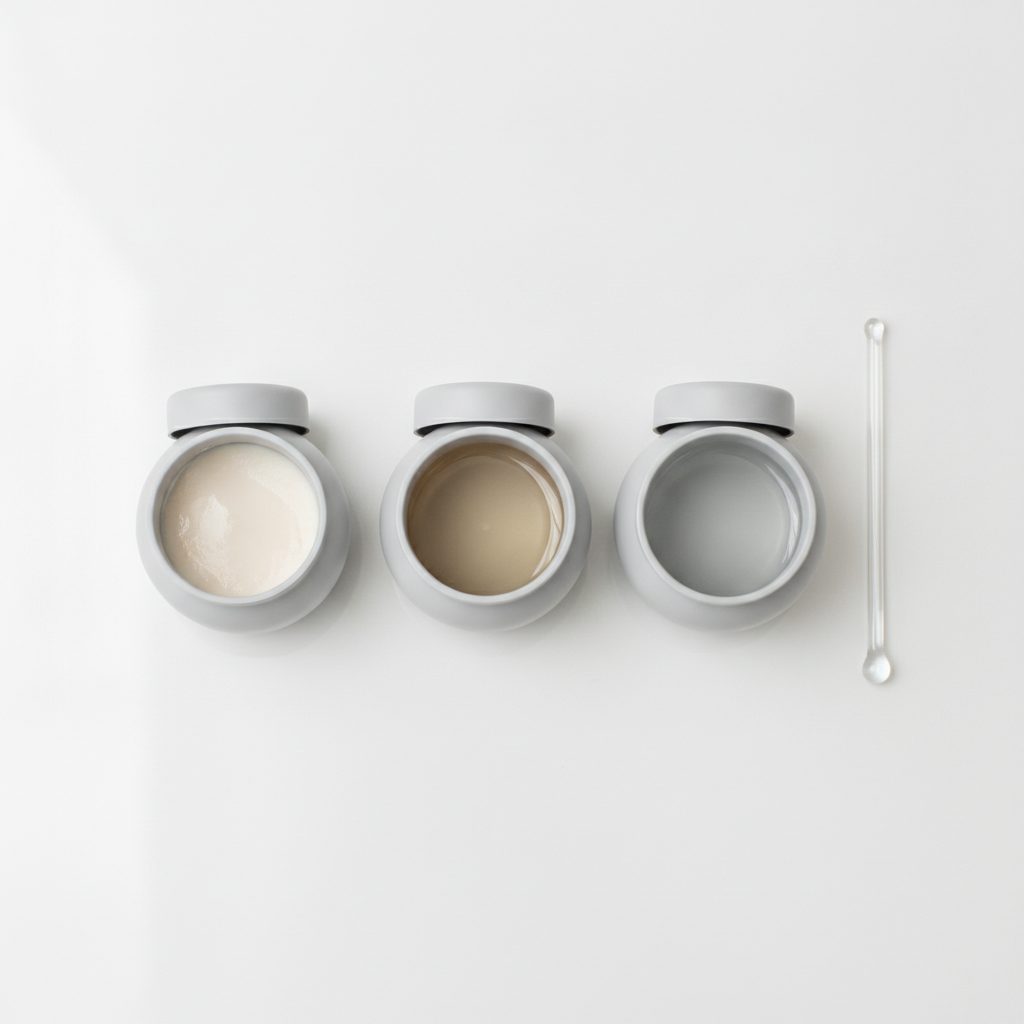
Wax vs Gel vs Pomade — The Hold Chemistry
Natural Wax Chemistry
Beeswax and carnauba wax are complex ester mixtures — long-chain fatty acids esterified with long-chain fatty alcohols. Beeswax forms a semi-crystalline matrix at room temperature; at body temperature (approximately 37°C) it softens and becomes workable, which is why you work any wax product between your palms before applying. This thermal sensitivity is what makes wax products pliable: they respond to the warmth of your hands and then the warmth of your scalp, transitioning from a firm solid to a workable paste in seconds. Carnauba wax — extracted from the leaves of the Copernicia prunifera palm — has a higher melting point (82–86°C vs beeswax's 62–65°C), adds structure and a degree of sheen, and is often used in combination with softer waxes to tune the final hardness and reworkability of the product.
Why Wax Doesn't Flake Like Gel
PVP/VA polymer gels — the active holding agents in most hair gels — form a rigid continuous film as they dry. When this film is mechanically stressed (running fingers through set hair, movement from wind, head contact with a pillow), the film fractures. Those white flakes you see from dried gel are microscopic breaks in a rigid polymer film. Wax systems are fundamentally different: they hold via surface adhesion rather than film formation. The wax coats each hair shaft individually without forming a continuous matrix between strands. Because the hold system is discontinuous, it deforms elastically under movement rather than cracking.
Water-Based vs Oil-Based Wax
Water-based products (Layrite Natural, for example) use emulsification to disperse wax particles in an aqueous base. This delivers two key advantages: they rinse out with water only (no shampoo required), and they can be re-activated mid-day with a small amount of water — a damp fingertip run through the hair reactivates the product and allows reshaping. Oil-based products such as Reuzel Pink use a lipid base (petrolatum, mineral oil, plant oils or beeswax) as the carrier for the wax component. These generally offer better longevity in humid conditions because water doesn't compromise their structure, but they require shampoo to remove — and often two shampoo cycles to fully clean out on thick or coarse hair.
Matte vs Shine
Shine in a hair product comes from a smooth, reflective surface — one that returns light in a specular (directional) rather than diffuse pattern. High-shine products create that smooth surface by depositing a continuous, even film. Matte products work by scattering light using particles with irregular surface texture. Clay particles (kaolin, bentonite) and engineered silica particles both function this way: the wax base provides the hold mechanism; the clay or silica layer determines the optical result. This is why clay-wax hybrids like Baxter of California Clay Pomade can deliver both genuine hold and genuine matte — they're doing two different jobs with two different ingredient categories.
Application Timing
Wax is the most versatile styling product in terms of application window. Unlike gel — which must be applied to damp hair to distribute evenly and activate the polymer network — wax works effectively on both damp and dry hair, each producing a different result. Dry application gives more texture and strand separation; the product grips individual dry strands rather than blending through wet hair uniformly. Damp application gives more control and definition — the wax distributes through the hair more evenly and the result is a cleaner, more deliberate style. Neither is wrong; the right choice depends on whether you want texture or control as the primary output.